Buying guide
Stud Finders Buying Guide (2027)
How to choose a stud finder in 2027: sensor arrays vs edge finders vs magnets vs imagers, depth ratings, and wall types.

Four technologies, four philosophies
Edge finders (Zircon e50, HD55) track density changes and need a sweep. Multi-sensor arrays (Franklin 710, M210) read width instantly. Magnetic finders (StudBuddy, CH Hanson) locate screws with zero electronics. Scanners and imagers (Bosch GMS120, Walabot, Zircon A200) add pipes, metal, and wires. Match the philosophy to your walls and your patience, not to marketing.
Depth and wall construction
Standard drywall over studs needs only 3/4-inch capability. Double drywall, paneling, and plaster demand DeepScan 1.5-inch ratings or alternative methods. Tile over backer board defeats most sensor finders; scan the same wall from the other side or use imaging and measurements from outlets and corners.
Hazard detection is a separate purchase decision
A stud finder that cannot warn about wires is only half a pre-drill tool. If you drill near outlets, switches, bathrooms, or kitchens, budget for WireWarning at minimum and a metal-detecting scanner ideally. The repair bill for one drilled pipe buys every tool in this guide.
Verification beats specification
Whatever you buy, scan at two heights, mark edges, find center, and confirm with a small pilot in a hidden spot before lag bolts. Even the best finder is an advisor; the test hole is the judge. Pros verify because callbacks are expensive; homeowners should verify because drywall patches are ugly.
Match the finder to the job you actually do
Picture hanging a few times a year needs only a magnet or a basic electronic finder and the patience to verify. Regular heavy hanging, TVs, cabinets, and grab bars, justifies a multi-sensor array whose instant width read removes the commonest errors. Renovation work that opens walls justifies hazard scanning or imaging, because the cost of one drilled pipe dwarfs every tool in this guide. Buy for your next twelve months of real projects, not for the most dramatic wall you can imagine.
Start with our top 3
The three highest-ranked products in our full stud finders ranking. Read the in-depth review where one exists, or jump to the product in the ranked list.

Franklin Sensors ProSensor 710
Thirteen sensors show the whole stud at once.
- Sensors: 13-sensor array
- Depth: Up to 1.5 in

Walabot DIY 2 In-Wall Imager
See studs, pipes, and wires on your phone screen.
- Method: Radio-frequency imaging
- Depth: Up to 4 in (drywall)
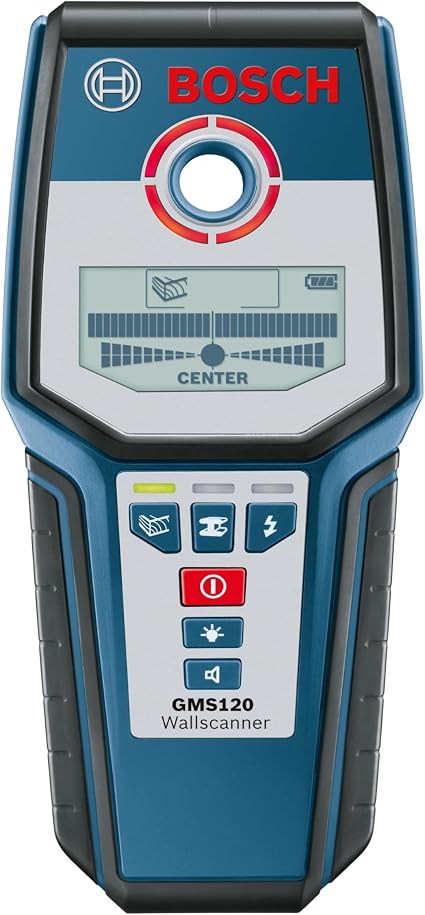
Bosch GMS120 Digital Wall Scanner
Pro scanner for studs, metal, and live cables.
- Modes: Drywall, Universal, Concrete
- Depth: Studs to 1.5 in; ferrous metal to 4.75 in; live cable to 2 in
Questions, answered
Where are studs usually located?
Typically 16 inches on center (24 in some construction), starting from corners, with outlets and switches fastened to stud sides. Finders confirm; assumptions drill drywall.
Can stud finders work on ceilings?
Yes, they find joists the same way, though arrays and magnets are easiest overhead. Mark joists for fans and projectors with extra verification; ceiling loads are unforgiving.
What about steel studs in condos?
Electronic finders detect them as masses, magnets find their screws, and loads need toggle or snap-toggle anchors rated for steel framing rather than wood lags.
Should I buy two finders?
A Franklin or electronic finder plus a five-dollar-class magnet is a beloved pro combination: electronics for speed, magnet for ground truth.