In-depth review
Soto WindMaster Review (2027)
In-depth review of the Soto WindMaster: concave burner wind performance, regulator behavior, and simmer control.
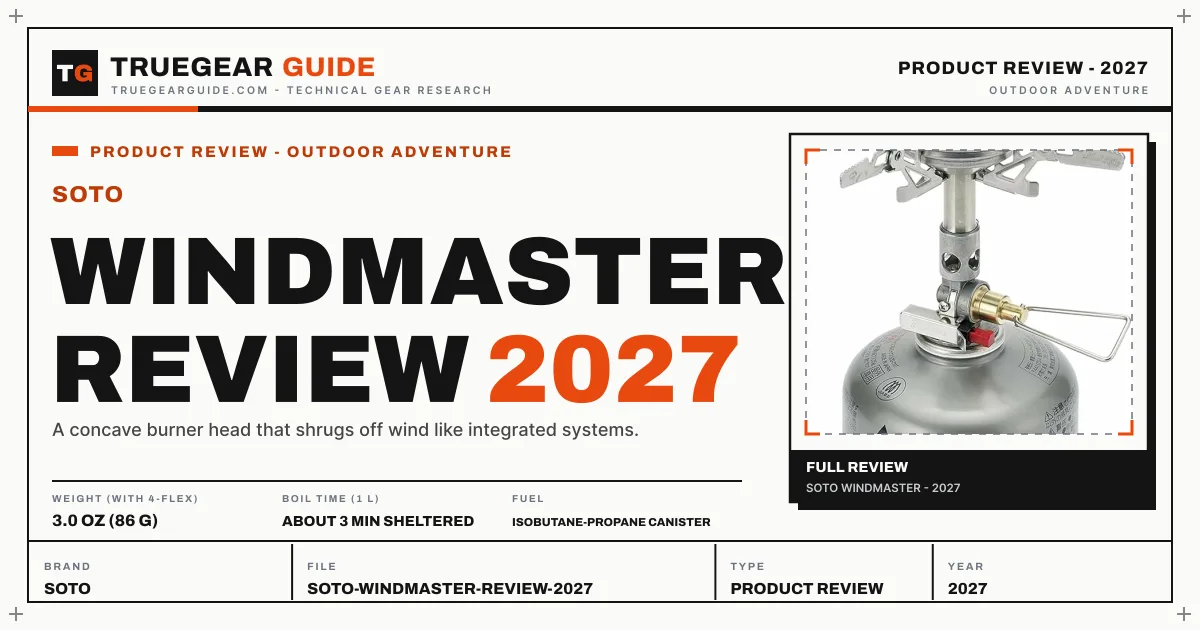

Soto WindMaster
A concave burner head that shrugs off wind like integrated systems.
Our verdict
The WindMaster is the separate stove that embarrassed integrated systems in windy comparative tests, and it adds the class's best combination of simmer control and a working igniter. For backpackers who cook real food where the wind actually blows, it is the most complete burner in this guide.
What we like
- Concave burner and close pot placement resist wind dramatically
- Boils fast and simmers genuinely well
- Built-in igniter that actually works at altitude
- Interchangeable 3-flex and 4-flex pot supports
What to watch out for
- Costs more than simpler canister stoves
- 4-flex support is a separate purchase on some bundles
- Small support arms need care with big pots
What owners report: Soto WindMaster
Synthesized from recurring themes in long-term owner feedback.
Most praised
- The concave burner head keeps boiling in gusts that send other stove owners behind rocks
- It simmers genuinely, so trail cooking goes beyond rehydrated pouches
- The built in igniter keeps sparking at altitude where piezo rivals give up
Common complaints
- It costs noticeably more than the simple canister stoves it sits beside
- The wider four leg support is a separate purchase in some bundles
- Big pots overhang the small support arms and demand a careful hand
Who it is for
Backpackers and alpine hikers who cook real meals in exposed, windy camps.
The burner head design
Soto recessed the burner into a concave well and positioned the pot close above it, so wind shears over the flame instead of through it. In published wind testing the WindMaster's boil times degrade far less than flat-headed rivals. This is engineering, not marketing: the flame's protected geometry is visible the moment you light it outdoors.
Regulator and ignition
The Micro Regulator holds output steady as canister pressure falls with cold and use, flattening the performance cliff that unregulated stoves hit on day four. The piezo igniter is mounted to survive and, unusually, keeps sparking at altitude where rivals sulk. Owners still pack a backup lighter, as they should with any igniter.
Cooking range
From a rolling boil to a bare simmer, the valve meters smoothly, and the wide burner pattern reduces the center hot spot that scorches sauces on mini stoves. Interchangeable 3-flex and 4-flex supports adapt from solo mugs to group pots. It is the rare ultralight stove that invites cooking rather than tolerating it.
Key specifications
- Weight (with 4-flex)
- 3.0 oz (86 g)
- Boil time (1 L)
- About 3 min sheltered
- Fuel
- Isobutane-propane canister
- Output
- 11,000 BTU/hr
- Ignition
- Built-in piezo (Micro Regulator)
Also consider
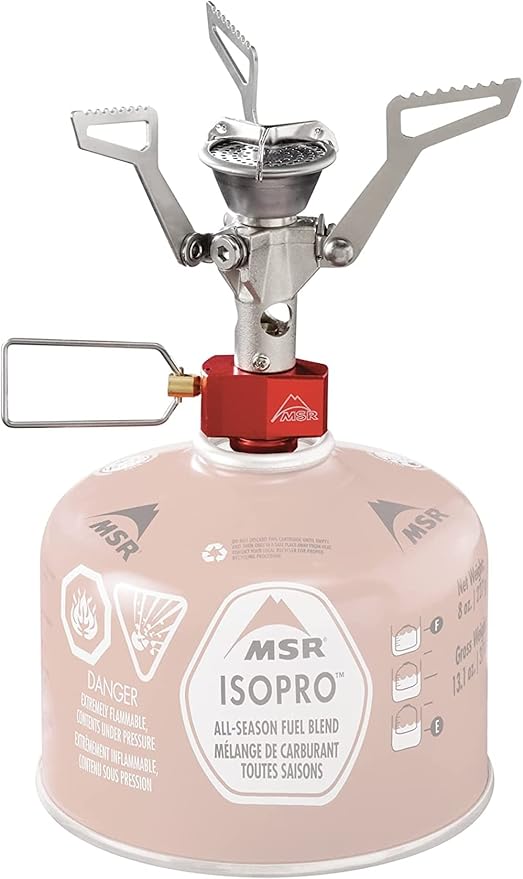
MSR PocketRocket 2
The benchmark mini canister stove: fast, tiny, dependable.
Why consider it: Lighter and cheaper if your camps are sheltered.
- Weight: 2.6 oz (73 g)
- Boil time (1 L): 3.5 min

MSR WindBurner
A radiant-burner system that wind simply cannot blow out.
Why consider it: Fully enclosed system for mountaineering-grade wind.
- Weight (1.0 L system): 15.3 oz (434 g)
- Boil time (1 L): 4.5 min (sheltered rating; excels in wind)
Research-based assessment. TrueGear has not hands-on tested this product; this evaluation synthesizes manufacturer specifications, retailer documentation, and published expert reviews.
Questions, answered
3-flex or 4-flex supports?
The 3-flex is lighter and suits small pots; the 4-flex adds stability for wider cookware and is worth its grams for cooks.
Does the regulator help in cold?
Yes. It compensates for falling canister pressure, keeping boils consistent deeper into the canister and into colder mornings than unregulated stoves.
How does it compare to the Amicus?
The WindMaster's deeper concave head and regulator outperform the Amicus in wind and cold; the Amicus wins on price. Both simmer well.