In-depth review
Potensic ATOM Review (2027)
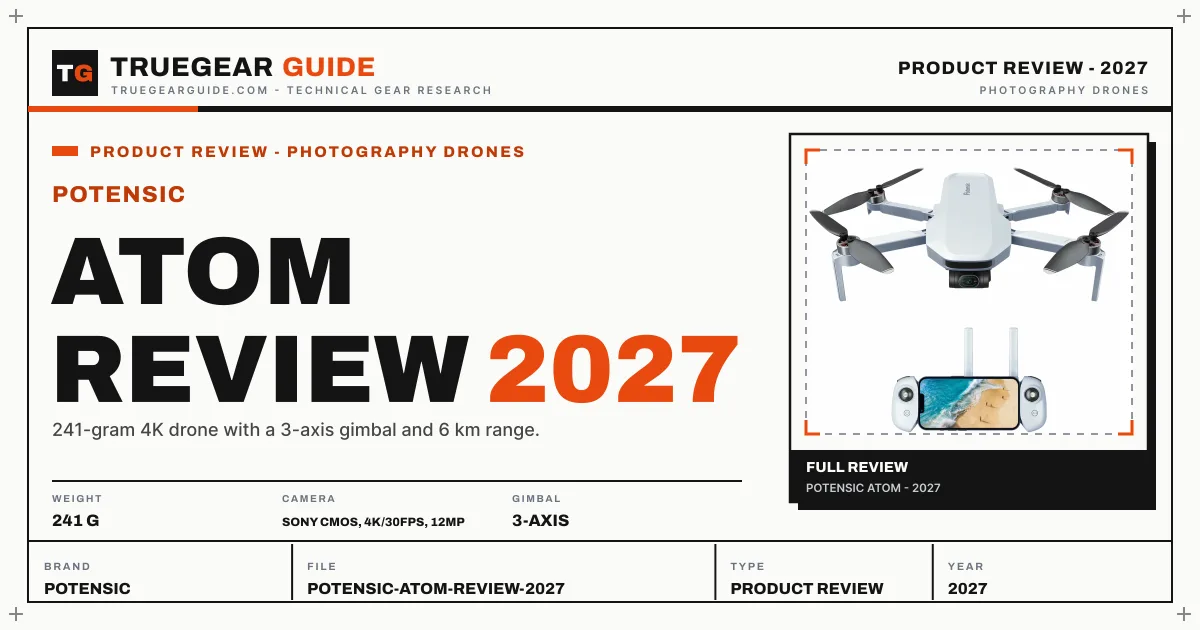
In-depth review of the Potensic ATOM: 241 g takeoff weight, Sony CMOS 4K/30fps camera, 3-axis gimbal, and 32-minute flight time.

Our verdict
The ATOM is the credible DJI alternative for beginners: under 249 g so recreational US flyers skip registration, a Sony CMOS camera with a real 3-axis gimbal, and tracking modes that make first footage look practiced. It leaves out obstacle avoidance, so new pilots owe it open fields and patience.
What we like
- 241 g takeoff weight skips FAA registration for recreational US use
- Sony CMOS sensor shoots 4K/30fps video and 12MP photos
- 3-axis gimbal keeps footage level in wind
- 32-minute max flight time and 6 km transmission range
What to watch out for
- Obstacle avoidance is not among its listed features
- 12MP stills limit heavy cropping compared to flagship minis
- 4K video caps at 30fps, no high frame-rate option
What owners report: Potensic ATOM
Synthesized from recurring themes in long-term owner feedback.
Most praised
- A proper three-axis gimbal at this price keeps footage level in a way electronic stabilisation cannot match
- Registration-free weight plus automated quick shots gives beginners a gentle on-ramp
- Endurance and range figures embarrass several better-known budget rivals owners cross-shopped
Common complaints
- No obstacle avoidance means positioning depends entirely on GPS and pilot care
- Stills resolution limits how far owners can crop a frame for prints
- Video lacks the higher frame choices for smooth slow motion
Who it is for
First-time drone buyers who want 4K footage and tracking without DJI money.
Camera and gimbal
A Sony CMOS sensor records 4K/30fps video and 12MP stills behind a 3-axis gimbal, the combination that separates watchable footage from shaky novelty clips. Stills will not match the Mini 4 Pro class for cropping, but video smoothness is genuinely competitive.
Flight basics done right
At 241 g it folds small, flies up to 32 minutes per battery, and holds a 6 km transmission link. Visual tracking and QuickShots automate the moves beginners see in highlight reels, while GPS positioning keeps it planted when thumbs come off the sticks.
What beginners must supply
Obstacle avoidance is not among its listed features, so situational awareness is the pilot's job: open spaces, slow first flights, and respect for the wind limits of a 241 g airframe. Parts and support ecosystems are also smaller than DJI's.
Key specifications
- Weight
- 241 g
- Camera
- Sony CMOS, 4K/30fps, 12MP
- Gimbal
- 3-axis
- Flight time
- 32 min max
- Range
- 6 km transmission
- Features
- Visual tracking, QuickShots
Sources: Amazon, Desertcart
Also consider

DJI Mini 3
The cheapest way into DJI's sub-249g lineup.
Why consider it: The DJI entry point with the bigger support network and accessory ecosystem.
- Weight: Under 249 g
- Camera: 1/1.3-inch CMOS, 4K30 HDR

DJI Neo
The 135-gram palm drone for absolute beginners.
Why consider it: A smaller, simpler palm drone if budget and ease outrank camera specs.
- Weight: 135 g
- Camera: 1/2-inch CMOS, 4K30
Research-based assessment. TrueGear has not hands-on tested this product; this evaluation synthesizes manufacturer specifications, retailer documentation, and published expert reviews.
Questions, answered
Do I need to register the ATOM with the FAA?
At 241 g it sits under the 249 g threshold, so recreational flyers in the US do not register it. Commercial use follows different rules, and other countries set their own limits.
How long does it actually fly?
The rated maximum is 32 minutes per battery in ideal conditions. Wind, tracking modes, and aggressive flying shorten that, so most pilots plan around shorter real-world flights.