In-depth review
DJI Mini 4 Pro Review (2027)
In-depth research review of the DJI Mini 4 Pro: sub-249g design, 1/1.3-inch sensor, omnidirectional sensing, and 4K100 video.
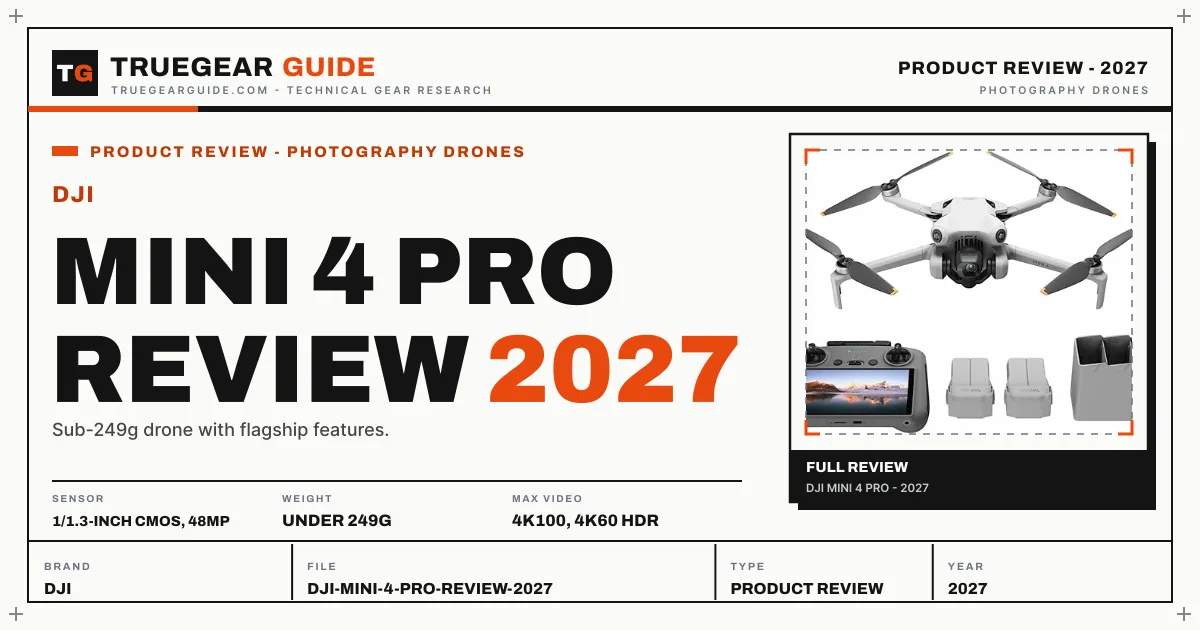

Our verdict
The Mini 4 Pro is the most important drone in this lineup because it democratizes capability: flagship sensing, a serious sensor, and 4K100 video in a body that needs no registration and fits in a pocket. Heavier drones win on sensor size and wind handling, but nothing wins on freedom.
What we like
- Under 249g: no FAA registration needed for recreational US flight
- 1/1.3-inch 48MP sensor punches above its weight class
- Omnidirectional sensing, rare in sub-249g drones
- 4K100 and 4K60 HDR cover serious video needs
What to watch out for
- Light weight means more wind drift than heavier drones
- Single camera: no telephoto option
- 34-minute flight time trails larger siblings
What owners report: DJI Mini 4 Pro
Synthesized from recurring themes in long-term owner feedback.
Most praised
- Registration-free weight with full obstacle sensing is a combination travellers build trips around
- Image quality from the small sensor surprises owners stepping up from phone-era drones
- It packs into a coat pocket, so it flies on hikes where bigger drones stayed in the car
Common complaints
- Gusts push the light airframe around, and owners learn to read wind before launching
- A single fixed lens means zooming is a crop, not a focal change
- Flight time trails its larger siblings, so travel days need a battery rotation plan
Who it is for
Travelers, hikers, and casual creators who want real aerial capability with minimum regulatory friction and maximum portability.
Weight class and regulations
Staying under 249g is a deliberate engineering achievement with outsized practical value: no FAA recreational registration in the US, simplified rules in the EU and other regions, and a footprint that fits anywhere. This is the drone you actually bring on trips, which matters more than any spec.
Camera performance
The 1/1.3-inch 48MP sensor is a genuine imaging tool, not a toy camera: 4K100 for slow motion, 4K60 HDR for contrasty scenes, and 48MP stills with useful detail. Low light trails larger sensors as physics dictates, but daylight and golden hour results are excellent.
Sensing and flight
Omnidirectional obstacle sensing in a sub-249g drone was unheard of a generation ago; it makes the Mini 4 Pro far more forgiving for beginners and for automated tracking shots through complex environments. 34-minute flight time is honest for the weight class. Wind is the real limit: gusty conditions push it around more than heavier drones.
Key specifications
- Sensor
- 1/1.3-inch CMOS, 48MP
- Weight
- Under 249g
- Max video
- 4K100, 4K60 HDR
- Flight time
- Up to 34 minutes
- Transmission
- O4, up to 20km
Also consider

DJI Air 3
Dual-camera versatility at a mid-tier price.
Why consider it: Choose the Air 3 for dual cameras, longer flight time, and better wind handling if you accept registration.
- Sensors: Dual 1/1.3-inch CMOS, 48MP each
- Cameras: 24mm wide, 70mm medium telephoto
Autel Evo Lite+
1-inch sensor with adjustable aperture, outside the DJI ecosystem.
Why consider it: Choose the Evo Lite+ for a larger 1-inch sensor and adjustable aperture in stills work.
- Sensor: 1-inch CMOS, 20MP
- Aperture: Adjustable f/2.8 to f/11
Research-based assessment. TrueGear has not hands-on tested this product; this evaluation synthesizes manufacturer specifications, retailer documentation, and published expert reviews.
Questions, answered
Is the Mini 4 Pro really exempt from registration?
For recreational US flight, yes, as long as it stays under 249g with the standard battery. The extended-flight battery pushes it over 249g and triggers registration; check your configuration.
How does it handle wind?
Acceptably to about 20 mph with GPS lock, but footage shows drift and battery drains faster fighting wind. Heavier drones hold position better; plan flights for calm windows.
Can it follow me while biking?
Yes, ActiveTrack works well at cycling speeds on open paths, with omnidirectional sensing helping through trees. Dense forest and high speeds still challenge any tracking system.