In-depth review
DJI Air 3 Review (2027)
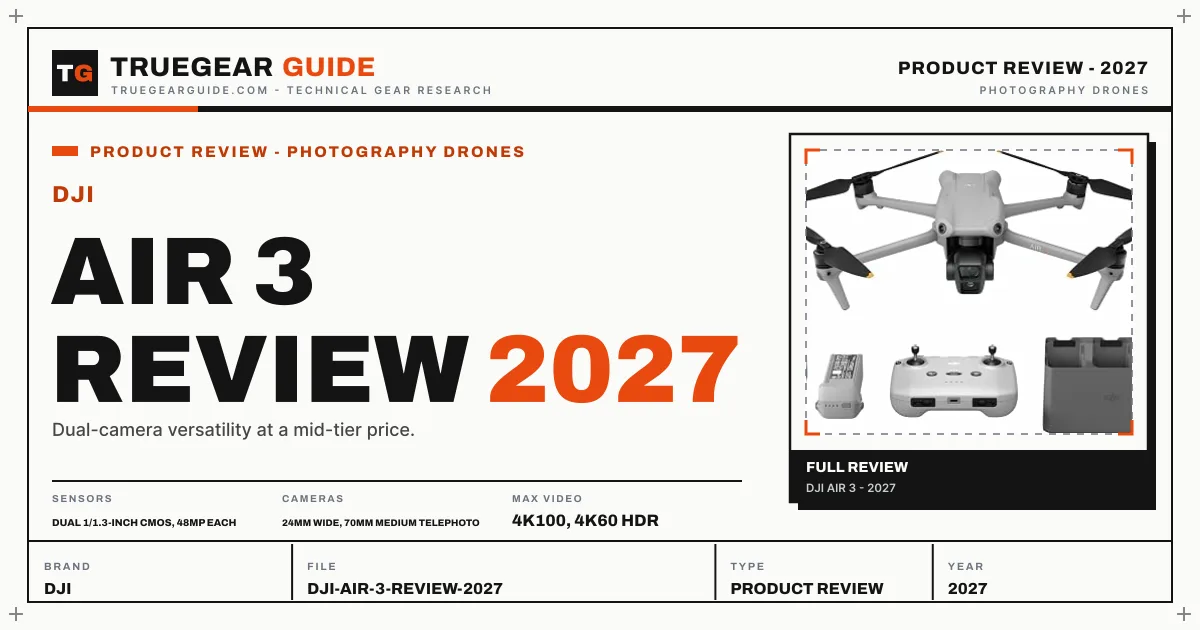
In-depth research review of the DJI Air 3: dual 48MP cameras, 46-minute flight time, O4 transmission, and omnidirectional sensing.

Our verdict
The Air 3 is the rational buy in the DJI lineup: dual cameras with a genuinely useful 70mm telephoto, flagship flight time, and full sensing coverage at a mid-tier price. It gives up the 4/3 sensor to the Mavic 3 Pro and little else that matters for most creators.
What we like
- Dual 48MP cameras: 24mm wide plus 70mm medium tele
- O4 transmission reaches 20km with strong signal
- 46-minute flight time matches the flagship
- Omnidirectional sensing at a mid-tier price
What to watch out for
- 1/1.3-inch sensors trail the 4/3 sensor in low light
- Over 249g, so FAA registration required recreationally
- No 5.1K option of the Mavic 3 Pro
What owners report: DJI Air 3
Synthesized from recurring themes in long-term owner feedback.
Most praised
- Switching to the medium telephoto in flight gives portraits and parallax shots a compressed look wide lenses cannot fake
- Flight endurance matches the flagship, so a two-battery kit covers a full morning of shooting
- Full obstacle sensing at this tier lets creators fly complex paths with less anxiety
Common complaints
- Smaller sensors show their limits at dusk next to the flagship larger-sensor model
- It crosses the weight line that triggers registration for casual flyers
- Owners wanting the top video resolution of the flagship line have to step up a tier
Who it is for
Serious hobbyists and semi-pro creators who want versatile focal lengths and long flight times without flagship cost.
Dual camera system
Two 1/1.3-inch 48MP sensors behind 24mm and 70mm lenses cover the perspectives creators actually use: wide establishing shots and compressed details. The 70mm is the standout, producing parallax and compression effects that elevate travel and real-estate footage well beyond single-camera drones.
Flight time and range
46 minutes of rated flight time means fewer battery swaps per location and more relaxed shooting; real-world times run lower with wind and maneuvering, but the margin over 30-minute-class drones is real. O4 transmission to 20km provides robust signal in typical operating ranges.
Sensing and value position
Omnidirectional obstacle sensing at this price was flagship-only a generation ago, and it makes automated modes and close-quarters flying far safer. Against the Mavic 3 Pro, you trade sensor size and the 166mm lens; against the Mini 4 Pro, you trade regulatory simplicity for capability.
Key specifications
- Sensors
- Dual 1/1.3-inch CMOS, 48MP each
- Cameras
- 24mm wide, 70mm medium telephoto
- Max video
- 4K100, 4K60 HDR
- Flight time
- Up to 46 minutes
- Transmission
- O4, up to 20km
Also consider

DJI Mavic 3 Pro
Triple-camera flagship with a 4/3 Hasselblad sensor.
Why consider it: Choose the Mavic 3 Pro when client work demands the 4/3 sensor and triple-camera flexibility.
- Main sensor: 4/3-inch CMOS Hasselblad, 20MP
- Cameras: 24mm 4/3, 70mm 48MP tele, 166mm 12MP tele

DJI Mini 4 Pro
Sub-249g drone with flagship features.
Why consider it: Choose the Mini 4 Pro for travel simplicity and sub-249g regulatory freedom.
- Sensor: 1/1.3-inch CMOS, 48MP
- Weight: Under 249g
Research-based assessment. TrueGear has not hands-on tested this product; this evaluation synthesizes manufacturer specifications, retailer documentation, and published expert reviews.
Questions, answered
Is the 70mm camera as good as the wide?
Same sensor and resolution, so image quality matches; the narrower field of view actually benefits from less distortion. It is a first-class camera, not a compromised secondary.
How many batteries do I need?
Three total for serious outings: 46 minutes rated translates to roughly 35 real minutes, and locations deserve multiple flights. The charging hub's sequential charging makes overnight prep easy.
Does it need registration?
Yes for US recreational flight: it exceeds 249g. Registration is inexpensive and quick online, and covers all your drones for three years.