Buying guide
Backpacking Backpacks Buying Guide (2027)
How to choose a backpacking backpack in 2027: capacity, torso fit, suspension, load ratings, and features explained.
Capacity: liters for trip length
Match capacity to trip length and packing style: 50 to 65 liters covers 3-to-5-day trips for most hikers, which is why all ten packs here sit in that range. Efficient ultralight packers manage weeklong trips in 55 liters; beginners with bulky gear may want 65-plus. When in doubt, 65 liters compresses down for short trips, while a too-small pack cannot stretch.
Torso fit: measure, then try loaded
Torso length, measured from the C7 vertebra to the iliac crest, determines pack size more than height. Adjustable-torso packs like all ten here cover a range, but always try the pack loaded with 20-plus pounds: tighten the hipbelt first and confirm 80 percent of the weight rests on your hips. Shoulder pressure means the torso is wrong or the hipbelt is loose.
Suspension and load ratings
Suspension is the frame, hipbelt, and harness system that transfers weight to your hips. Ventilated mesh backs like the Atmos AG prioritize cooling; pivoting systems like the Baltoro's Response A3 prioritize load control; lighter frames like the Exos 58's prioritize weight. Every pack has a load rating: respect it. A 35 lb-rated pack carrying 45 lb will be miserable regardless of brand.
Features worth having
Prioritize: a floating or removable lid for capacity flexibility, hipbelt pockets for snacks and phones, a sleeping bag compartment or wide bottom access, and trekking pole attachments. Rain covers are convenient but pack liners are lighter and more reliable. Removable lids and framesheets on packs like the Blaze 60 are genuinely useful for tuning weight to the trip.
Start with our top 3
The three highest-ranked products in our full backpacking backpacks ranking. Read the in-depth review where one exists, or jump to the product in the ranked list.
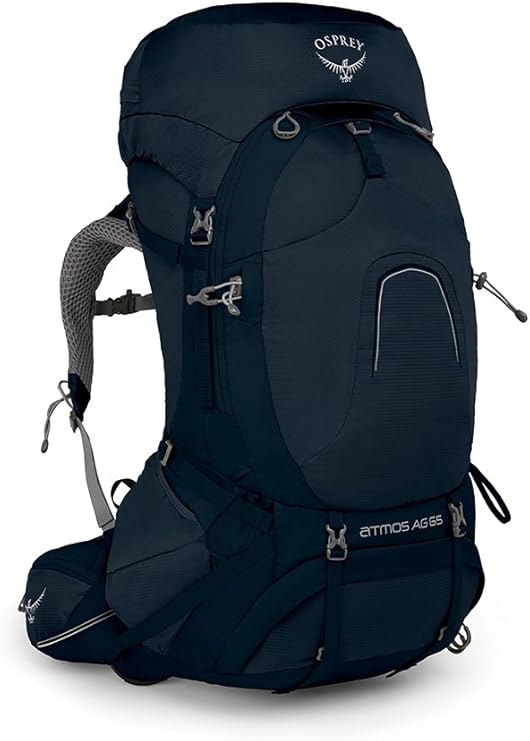
Osprey Atmos AG 65
The Anti-Gravity suspension that redefined ventilated comfort.
- Capacity: 65 L (3967 cu in)
- Weight (men's M): 4 lb 11 oz (2.13 kg)
Gregory Baltoro 65
The load-hauling king for heavy, awkward gear.
- Capacity: 65 L (3967 cu in)
- Weight (men's M): 4 lb 14 oz (2.21 kg)

Kelty Redwing Traveler 50
Kelty's iconic travel pack that still carries like a real backpack.
- Capacity: 50 L
- Weight: 3 lb 11 oz (1.67 kg)
Questions, answered
What size pack do I need for a thru-hike?
55 to 65 liters for most thru-hikers, with resupply strategy mattering more than pack size. Long food carries demand the upper end.
How much should my pack weigh empty?
Under 3 lb is lightweight, 4 to 5 lb is standard for full suspension. The pack's weight matters less than total packed weight, but every pound counts.
Do I need a women's specific pack?
If a unisex pack does not fit: women's models adjust torso geometry, hipbelt angle, and shoulder strap shape. Fit, not labels, decides.
How do I pack a backpack?
Bottom: sleeping bag and light bulky items. Core, against your back: heavy items like food and water. Top: layers and essentials. Pockets: snacks, map, headlamp, rain shell.