In-depth review
Spectra Precision LL300N Self-Leveling Rotary Laser Review (2027)
In-depth review of the Spectra Precision LL300N: 1,650 ft range, HL450 receiver, IP66 drop-tough housing, and one-button leveling.
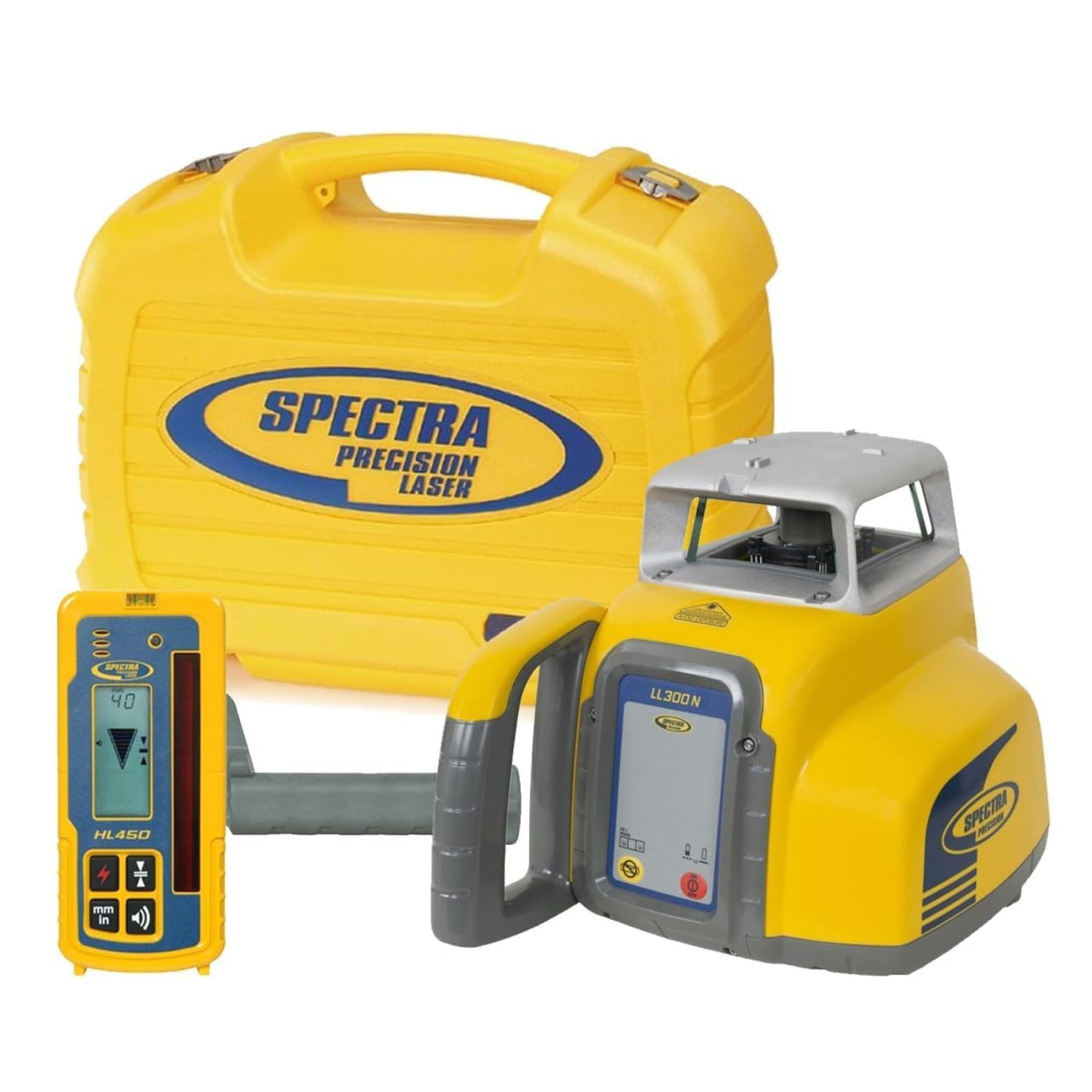
Spectra Precision LL300N Self-Leveling Rotary Laser
Rugged single-button rotary with a 1,650-foot range.
Our verdict
The LL300N is the rotary for crews who break things: a sealed IP66 housing rated for 3 ft drops onto concrete, honest plus/minus 3/32 in accuracy at 100 ft, and setup so simple it takes one button. It skips powered slope and rechargeable power, and that focus is exactly why it survives on rough sites.
What we like
- 1,650 ft diameter working range with the HL450 receiver
- Automatic self-leveling with a single button, no menus to learn
- IP66 housing rated to survive 3 ft drops onto concrete
- HL450 receiver and clamp included for one-person grade checks
What to watch out for
- Tripod and grade rod are not included in the standard kit
- Manual slope only, no electronic dual-slope function
- Runs on D-cell alkaline batteries rather than a rechargeable pack
What owners report: Spectra Precision LL300N Self-Leveling Rotary Laser
Synthesized from recurring themes in long-term owner feedback.
Most praised
- Grading crews praise the single button self leveling for getting a plane up before the pour starts
- The housing surviving drops onto concrete is the story owners repeat most
- The included receiver with clamp makes one person grade checks routine instead of a two person favor
Common complaints
- Discovering the standard kit skips the tripod and rod frustrates buyers who assumed a complete system
- D cell power feels old fashioned next to rechargeable rivals, even if runtime is long
- Slope work is manual only, so drainage jobs demand extra setup care
Who it is for
Site contractors grading pads, driveways, and drainage who value toughness over features.
Range and receiver
The HL450 receiver and clamp ship in the kit and read across a 1,650 ft diameter, enough for pads, parking areas, and long drainage runs from one setup. Accuracy of plus/minus 3/32 in at 100 ft sits a class above general site rotaries and below survey instruments, which matches its grading brief.
Built to be dropped
Spectra rates the LL300N to survive 3 ft drops onto concrete and 5 ft tripod tip-overs, and the IP66 housing seals out the dust and rain that kill lesser rotaries. This is the tool you hand to the newest crew member without a speech.
Simple on purpose
One button starts automatic self-leveling; there are no menus to misconfigure. The trade-offs are manual slope only and D-cell alkaline power, so crews doing daily dual-slope work or wanting rechargeable packs should look upmarket.
Key specifications
- Accuracy
- ±3/32 in at 100 ft
- Range
- 1,650 ft diameter with receiver
- Beam
- Red rotary
- Self-leveling
- Automatic, one button
- Rating
- IP66
- Power
- 4x D-cell alkaline
Sources: CamelCamelCamel, Desertcart, Shoppingbag.pk
Also consider

Topcon RL-H5A Rotary
The grading rotary standard: 800m range, slope capable.
Why consider it: Survey-class accuracy, slope capability, and 100-hour runtime for daily grading programs.
- Accuracy: ±10 arc sec (±1/16 in at 100 ft)
- Range: 800 m diameter with receiver

Johnson Level 99-027K Self-Leveling Rotary Laser System
Complete rotary kit with tripod, detector, and rod.
Why consider it: A complete kit with tripod and grade rod included when you need everything in one case.
- Accuracy: Approx. plus/minus 3/16 in at 100 ft class, verify per listing
- Range: Approx. 2,000 ft diameter with detector class, verify per listing
Research-based assessment. TrueGear has not hands-on tested this product; this evaluation synthesizes manufacturer specifications, retailer documentation, and published expert reviews.
Questions, answered
Does the LL300N kit include a tripod?
No. The standard kit includes the laser, HL450 receiver with clamp, batteries, and a small hard case. Budget for a tripod and grade rod if you do not already own them.
Can it set slopes for drainage?
Yes, with manual slope adjustment after self-leveling. It does not offer powered dual-slope grading, so frequent two-axis slope work belongs to a higher instrument class.