Buying guide
Rain Jackets Buying Guide (2027)
How to choose a rain jacket in 2027: layer constructions, waterproof ratings, DWR wet-out, venting, and fit over layers explained.
Construction: 2-layer, 2.5-layer, 3-layer
Two-layer jackets hang a loose mesh liner inside a coated shell: comfortable and cheap, bulky to pack. Two-and-a-half-layer jackets print a pattern over the membrane instead of a liner: the lightest and most packable, with a slightly clammy feel. Three-layer jackets bond membrane between face fabric and a full inner fabric: the most comfortable, durable, and expensive. Hikers who live in rain buy 3-layer; ounce-counters and occasional users buy 2.5-layer; everyone else should skip 2-layer for trail use.
Waterproof and breathability ratings, decoded
Waterproofness in millimeters (10k, 20k, 30k) describes the water column a fabric withstands before leaking; 10k handles trail rain, 20k-plus handles storms and pack-strap pressure. Breathability figures (grams of vapor per day) are tested inconsistently across brands, so treat them as rough tiers, not gospel. In practice, venting and DWR health move real comfort more than any lab number.
DWR and the wet-out illusion
The durable water repellent finish makes rain bead off the face fabric. When it wears, the fabric saturates (wetting out), the jacket looks soaked, breathability collapses, and you feel wet from your own condensation even though the membrane is not leaking. Most 'my jacket leaks' stories are wet-out. The cure is maintenance: wash with tech wash, tumble dry to reactivate the DWR, and re-proof when beading stops returning.
Fit, hoods, and venting
Try a shell over the thickest layer you will pair with it, then reach overhead and simulate poling: sleeves should not drag the hem up. A good hood moves with your head, preserves peripheral vision, and cinches against wind. Pit zips remain the single most valuable feature for anyone climbing in rain; core vents and mesh pockets help, but nothing replaces a zip from elbow to ribs.
Start with our top 3
The three highest-ranked products in our full rain jackets ranking. Read the in-depth review where one exists, or jump to the product in the ranked list.

Black Diamond Fineline Stretch Rain Jacket
A stretch 2.5-layer BD.dry shell with real pit zips at 11.3 oz.
- Weight (men's M): 11.3 oz (320 g)
- Construction: 2.5-layer BD.dry laminate, fully seam-taped
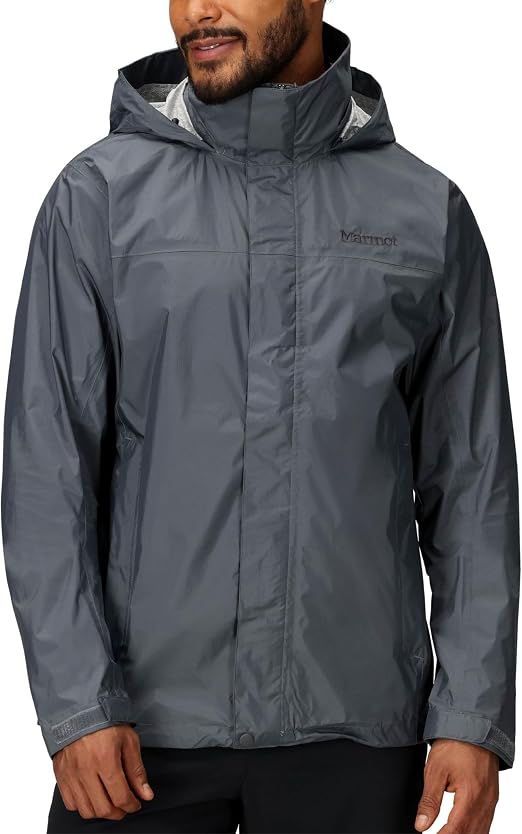
Marmot PreCip Eco
The classic value shell, updated with PFC-free NanoPro Eco coating.
- Weight (men's M): 10.1 oz (286 g)
- Construction: 2.5-layer NanoPro Eco PU coating

Outdoor Research Helium Rain Jacket
A 6.2 oz Pertex Shield shell that disappears into any pack.
- Weight (men's M): 6.2 oz (176 g)
- Construction: 2.5-layer Pertex Shield Diamond Fuse
Questions, answered
Do I need GORE-TEX specifically?
No. House membranes like H2No, Pertex Shield, and DryVent perform comparably in trail conditions. GORE-TEX earns its premium in consistency, the C-KNIT comfort tier, and resale value, not in a monopoly on staying dry.
Rain jacket or poncho?
Ponchos ventilate wonderfully and cover packs, but flap in wind and snag on brush. Jackets win for trails, wind, and camp chores; ponchos remain a budget and bikepacking niche with real virtues.
How should a rain jacket fit?
Room for a fleece or light puffy beneath, sleeves past the wrist with arms raised, and a hem that covers your hip belt line. Athletic shells fit trimmer; size up if you layer heavily in winter.
How do I wash a rain jacket?
Machine wash warm with a technical cleaner (never fabric softener), rinse well, and tumble dry medium for 20 minutes to reactivate the DWR. This single routine fixes most performance complaints.