In-depth review
Lumie Bodyclock Shine 300 Review (2027)
In-depth review of the Lumie Bodyclock Shine 300: gradient realism, adjustability, and light-therapy heritage.
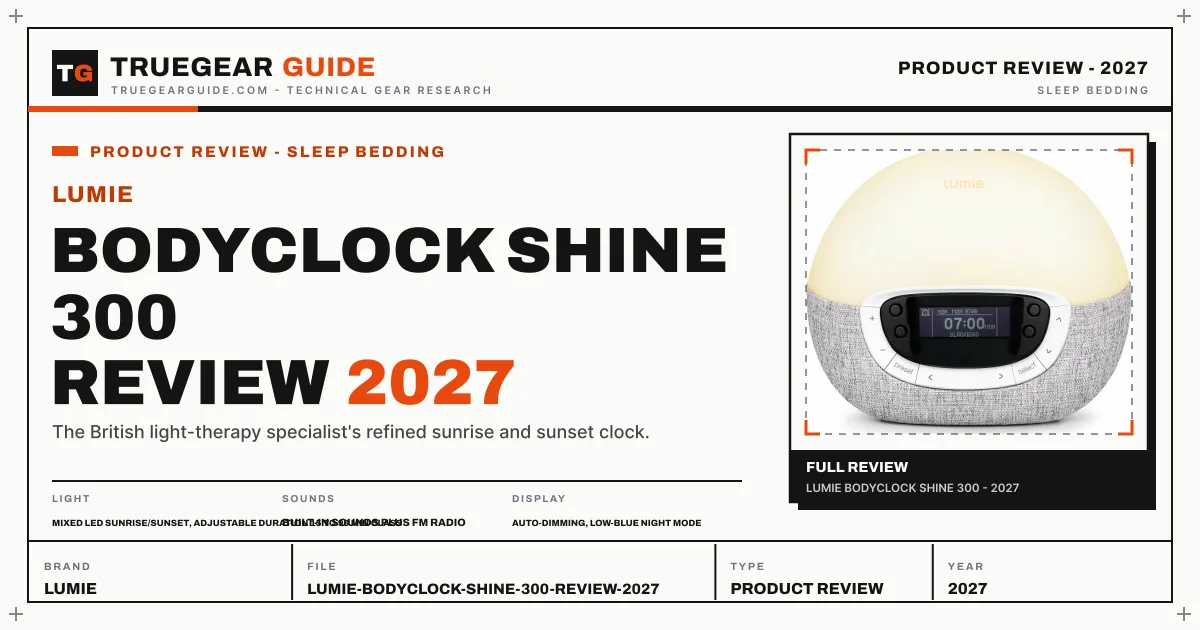

Lumie Bodyclock Shine 300
The British light-therapy specialist's refined sunrise and sunset clock.
Our verdict
The Shine 300 is what happens when a light-therapy company builds an alarm clock instead of the reverse: the gradient is the smoothest here, durations stretch long for gradual winter wakes, and the low-blue night mode shows real circadian thinking. It lacks apps and bargains, and the menu asks a weekend of patience. Light quality absolutists, this is your clock.
What we like
- Smooth, realistic sunrise and sunset gradients refined over decades of light therapy
- Mixed LEDs produce natural color progression rather than harsh white jumps
- Multiple sounds including radio, with a low-blue-light night mode
- Adjustable sunrise duration and final light intensity
What to watch out for
- No app or smart-home features
- Premium pricing in the US market
- On-device menu takes a few days to learn
What owners report: Lumie Bodyclock Shine 300
Synthesized from recurring themes in long-term owner feedback.
Most praised
- Gradients blend smoothly with no visible color jumping, a Lumie hallmark owners praise
- Mixed LEDs produce a natural progression instead of a harsh white glare
- Low blue night mode and auto dimming display respect light sensitive sleepers
Common complaints
- The on device menu takes several days of use to feel intuitive
- There is no app or smart home control of any kind
- US pricing carries a premium for a specialist brand sold on expertise
Who it is for
Light-sensitive sleepers, northern-latitude winter sufferers, and buyers who trust specialist heritage over feature lists.
Gradient and light character
Mixed LEDs blend a warm, sun-like progression rather than tinting a white lamp. Owners upgrading from budget clocks describe the sunrise as the first one that feels like weather rather than electronics, and the final intensity is tunable for light-sensitive users who find Philips glare harsh.
Adjustability
Sunrise and sunset durations, final brightness, alarm sounds, radio, and weekly scheduling give tinkerers real control, all on-device. The flip side is a menu system that rewards reading the manual once, properly, instead of poking buttons at midnight.
Value case
In the US the Shine 300 costs premium money without smart features. The value case is purely optical and physiological: if light quality is why you are buying, it leads; if features per dollar lead, the Dekala or Philips HF3520 win.
Key specifications
- Light
- Mixed LED sunrise/sunset, adjustable duration 15 to 90 min class
- Sounds
- Built-in sounds plus FM radio
- Display
- Auto-dimming, low-blue night mode
- Brand focus
- Light therapy specialist since the 1990s
- Alarms
- Daily or weekly alarm options
Also consider

Philips SmartSleep Wake-Up Light HF3520
The original wake-up light, with a colored sunrise that still sets the standard.
Why consider it: Most of the light quality for less, with simpler controls and wider availability.
- Light output: Up to 300 lux, 20 brightness levels
- Sunrise duration: Adjustable, typically 20 to 40 min

Dekala Smart Sunrise Alarm Clock
App and voice control with a full-color sunrise at a mid price.
Why consider it: App and voice control if you decide features matter more than gradient purity.
- Control: App, voice (Alexa), and on-device
- Light: Full-color sunrise/sunset, night light
Research-based assessment. TrueGear has not hands-on tested this product; this evaluation synthesizes manufacturer specifications, retailer documentation, and published expert reviews.
Questions, answered
Does the Shine 300 have a backup alarm?
Yes, the sound alarm functions as the wake backstop after the light phase, and settings persist through short outages per the manual.
Can I turn the clock display fully off?
The display auto-dims and offers a low-blue night mode suited to sensitive sleepers; check display settings for the darkest option.
Is Lumie a medical device?
Lumie makes certified light-therapy products, but a wake-up clock is a wellness device, not a treatment. For diagnosed seasonal conditions, use their 10,000 lux lamps and clinical guidance.