In-depth review
Carex Day-Light Classic Plus Review (2027)
In-depth review of the Carex Day-Light Classic Plus: clinical-box design, large light field, and who should buy it in 2027.
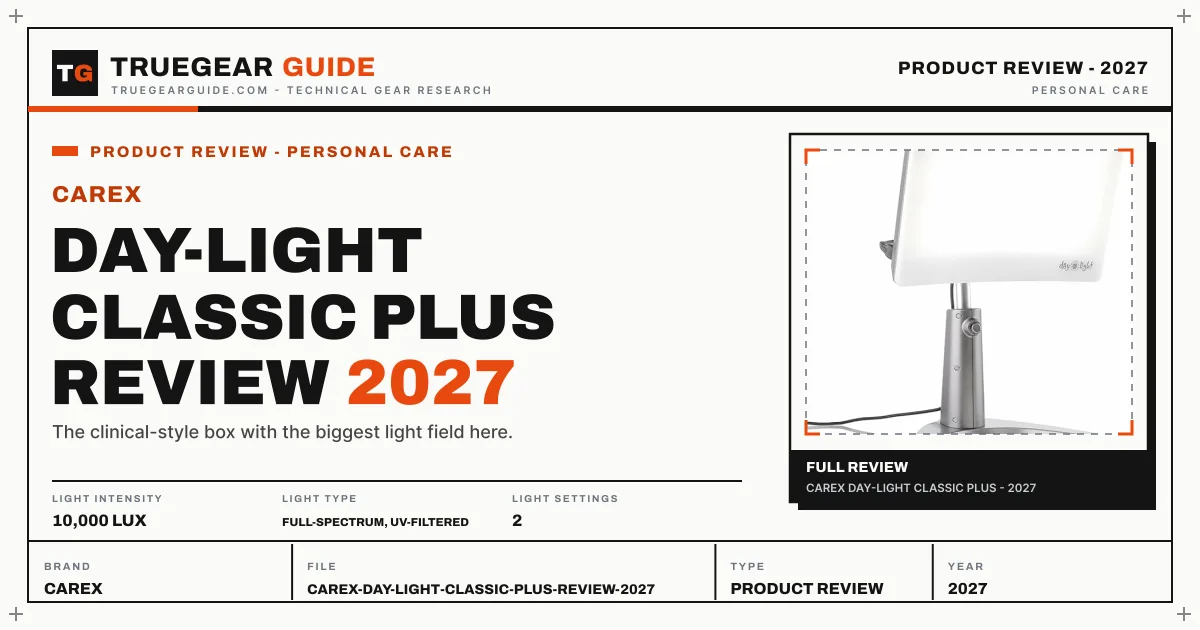

Carex Day-Light Classic Plus
The clinical-style box with the biggest light field here.
Our verdict
The Day-Light Classic Plus is the serious-therapy choice. Its large light field makes the 10,000-lux dose forgiving of imperfect positioning, which is exactly what struggling users need. It is bulky and clinical-looking, but when winter mood is the problem, efficacy beats aesthetics.
What we like
- 10,000 lux from a large therapy-box screen for easy positioning
- 2 light settings including a lower evening-friendly option
- Adjustable height stand and angle for precise placement
- Long track record; one of the most recommended clinical-style lamps
What to watch out for
- Bulky box design dominates desk space
- Fluorescent-style light quality feels clinical, not cozy
- Heavier and less portable than slim LED panels
What owners report: Carex Day-Light Classic Plus
Synthesized from recurring themes in long-term owner feedback.
Most praised
- The large screen makes correct positioning forgiving, which matters on groggy early mornings
- A lower setting gives an evening option that does not blast the room at full intensity
- Adjustable height and angle let owners aim light properly while reading or working
Common complaints
- The bulky box takes over a desk and announces itself in any room
- Its clinical look and feel are the opposite of cozy home lighting
- It is heavier and far less portable than the slim panels owners compare it with
Who it is for
People with significant seasonal symptoms and anyone who wants the most forgiving positioning. Not for small desks or design-conscious buyers.
Why screen size matters
Lux follows the inverse square law: double the distance, quarter the intensity. A small panel delivering 10,000 lux at 16 inches delivers far less at 24 inches if you drift. The Carex's large therapy-box screen creates a wide field of 10,000 lux, so normal movement during a session, sipping coffee, glancing at a phone, does not drop you out of the therapeutic zone. For users whose symptoms make discipline hard, this forgiveness is clinically meaningful.
Light quality and settings
The full-spectrum UV-filtered light mimics daylight color temperature for the therapy dose. Two settings include a lower option some users prefer for easing in. The light quality is unapologetically clinical: bright, white, functional. It will not double as ambient lighting the way warm-mode LED panels do, and that is fine because it is not trying to.
Size and living with it
The adjustable stand sets height and angle precisely, which matters for directing the field at face level. The trade-off is footprint: this is a box that lives on a table, not a panel that disappears. Owners typically dedicate a spot, a kitchen table corner, a reading chair side table, and build the session into breakfast. Accept the bulk as the price of the field.
Key specifications
- Light intensity
- 10,000 lux
- Light type
- Full-spectrum, UV-filtered
- Light settings
- 2
- Stand
- Adjustable height and angle
- Design
- Clinical therapy box
Also consider

Verilux HappyLight Lumi Plus
The popular 10,000-lux lamp with a slim profile.
Why consider it: Choose the Verilux if you want 10,000 lux in a slim design that fits a desk.
- Light intensity: 10,000 lux
- Light type: Full-spectrum LED, UV-free

Circadian Optics Lumos 2.0
10,000 lux with 3 color temperatures and a timer.
Why consider it: Choose the Lumos 2.0 if you want portability and a timer at a lower price.
- Light intensity: 10,000 lux
- Color temperatures: 3 (white to warm amber)
Research-based assessment. TrueGear has not hands-on tested this product; this evaluation synthesizes manufacturer specifications, retailer documentation, and published expert reviews.
Questions, answered
Is bigger really better for light therapy?
For dose reliability, yes. Larger fields tolerate movement and positioning errors that drop small panels below therapeutic intensity. If you are disciplined about sitting still and close, a slim panel suffices.
How long do the bulbs last?
The fluorescent-style tubes last thousands of hours; at 30 minutes daily, that is many years. When output dims noticeably, replacement tubes are available, unlike sealed LED panels.
Can I read while using it?
Yes, and you should: the protocol is 20 to 30 minutes of proximity, not staring. Read, eat breakfast, or work with the lamp positioned to the side of your visual field.