Buying guide
IPL Hair Removal Buying Guide (2027)
How to choose an at-home IPL device in 2027: suitability charts, sensors, flash counts, cooling, and realistic result timelines.
Step zero: check your contrast
IPL targets melanin in the hair shaft. It works on light to medium skin with dark hair, fades as hair lightens, and fails on blonde, red, grey, and white hair. Very dark skin absorbs too much light at the surface for most home devices. Every reputable brand publishes a skin-tone and hair-color chart; if your combination is outside it, no feature list changes the physics, and salon laser with wavelength options is the honest alternative.
Sensors, levels, and safety systems
Full-auto sensors like Braun's SensoAdapt adjust output continuously and lock out unsuitable flashes. Advisory systems like Philips SmartSkin recommend a level. Pure manual devices demand chart discipline and patch tests. Contact sensors that prevent open-air flashing, UV-filtered windows, and clear tone charts are the safety features that matter; flash-count bragging is not.
Speed: window, flash rate, glide
Legs expose every weakness. A large window with sub-second flash recycling and a glide mode finishes both legs in 10 to 20 minutes; a small-window stamp device can take 45, and abandoned courses are the top cause of IPL failure stories. Match the device's pace to the area you actually plan to treat, at the cadence of weekly sessions for about 12 weeks.
Comfort, flashes, and total cost
Ice and sapphire cooling meaningfully reduce the snap sensation and are worth paying for if pain has stopped you before. Flash counts above 300,000 are effectively lifetime for one user, so compare on comfort, speed, and sensing rather than chasing 999,900. Finally, budget the unglamorous extras: replacement razors for pre-shaving, sunscreen for treated skin, and patience.
Start with our top 3
The three highest-ranked products in our full ipl hair removal devices ranking. Read the in-depth review where one exists, or jump to the product in the ranked list.

Braun Silk-expert Pro 5
Premium IPL with SensoAdapt sensor reading skin tone 80 times per second.
- Flashes: 400,000
- Energy: Up to 6 J/cm2
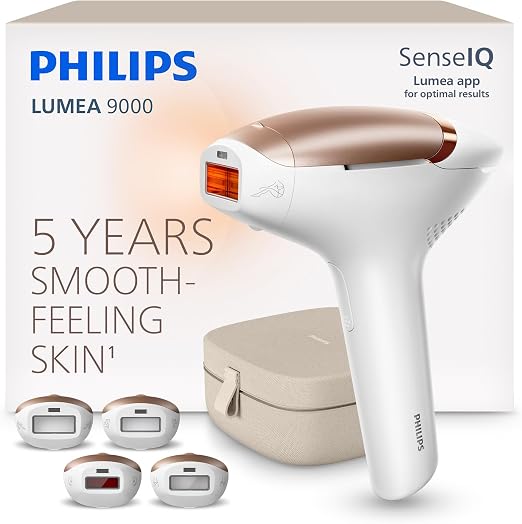
Philips Lumea Prestige IPL
Cordless-capable IPL with curved attachments and SmartSkin sensor advice.
- Flashes: 450,000 (current Prestige models)
- Attachments: Body, face, bikini, underarm curved heads

Ulike Sapphire Air 3 IPL
Ice-cooling sapphire IPL with auto-glide mode and a lightweight body.
- Cooling: Sapphire ice-cooling window
- Modes: Soft, body, power plus auto-glide
Questions, answered
IPL or laser: what is the difference?
Laser uses one wavelength; IPL uses filtered broad-spectrum light. Salon lasers are stronger and suit more skin tones. Home IPL is slower and gentler but private, painless-er, and far cheaper per course.
Can I use IPL over tattoos or moles?
No. Dark pigment absorbs the light and can burn or fade. Cover tattoos and avoid moles, freckles clusters, and any pigmented lesion.
What about sun exposure and tanning?
Do not treat tanned skin, avoid sun on treated areas for at least a week either side, and use SPF diligently; tanning changes your contrast and your risk.
When should I not use IPL at all?
During pregnancy (untested), on broken or irritated skin, over recent sunburn, or with photosensitizing medication. When in doubt, the manual and a clinician outrank any guide.