Head to head
Insta360 Ace Pro 2 vs DJI Osmo Action 5 Pro (2027)
Insta360 Ace Pro 2 vs DJI Osmo Action 5 Pro compared for 2027: Leica 8K image quality against battery life and waterproofing.
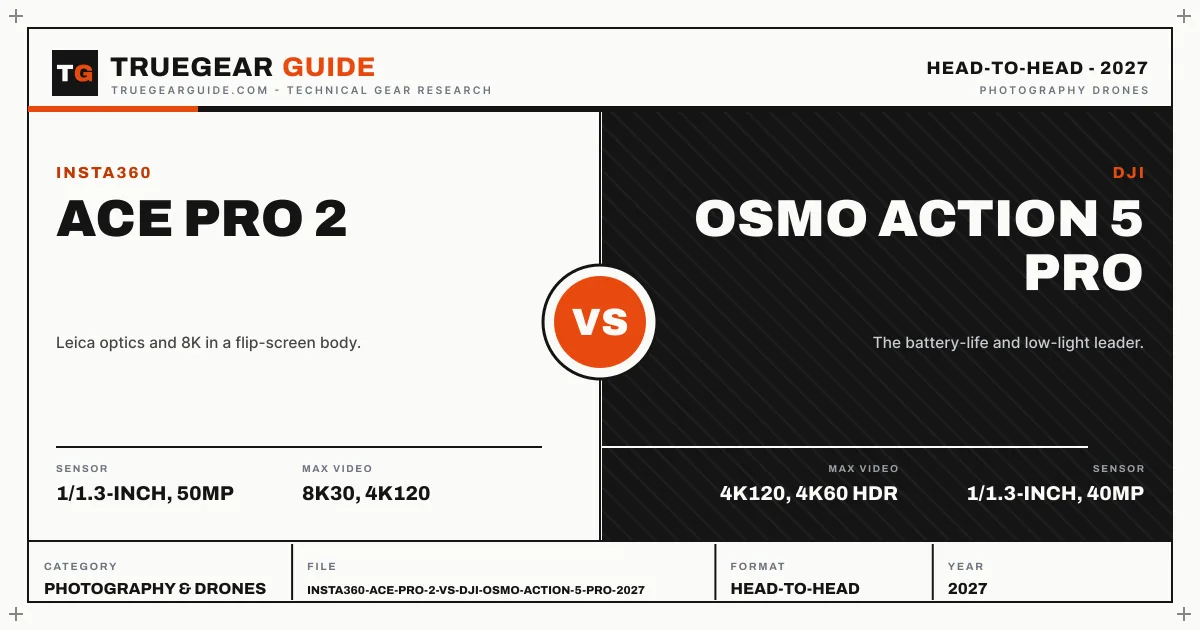

Insta360 Ace Pro 2
Leica optics and 8K in a flip-screen body.
- Sensor: 1/1.3-inch, 50MP
- Max video: 8K30, 4K120

DJI Osmo Action 5 Pro
The battery-life and low-light leader.
- Sensor: 1/1.3-inch, 40MP
- Max video: 4K120, 4K60 HDR
Our recommendation
Buy the Insta360 Ace Pro 2 if daylight image quality and vlogging ergonomics are the priority; buy the DJI Osmo Action 5 Pro for endurance, diving, and cold weather. Both share the 1/1.3-inch sensor class, so this is a use-case decision, not a quality one.
Image quality philosophy
The Ace Pro 2 chases maximum quality: 50MP sensor, Leica optics, 8K30 for reframing. The Action 5 Pro chases reliability: 40MP sensor tuned for efficiency, longer runtimes, better sealing. Daylight sharpness favors Insta360; shooting endurance favors DJI.
Vlogging vs adventure
Insta360's flip screen and AI editing serve solo creators directly. DJI's 20m waterproofing, cold-weather battery, and subject tracking serve adventure use. Match the camera to where you point it most.
Workflow costs
8K footage demands fast cards, big storage, and patience in transfer and editing. The Action 5 Pro's 4K120 max keeps files manageable. Factor storage cost into the Ace Pro 2's total price of ownership.
Choose Insta360 Ace Pro 2 if…
- You want the sharpest daylight footage available
- You vlog solo and want a flip screen plus AI editing
- Reframing 8K into 4K deliverables fits your workflow
Choose DJI Osmo Action 5 Pro if…
- Battery life and cold-weather reliability matter
- You dive or shoot in heavy rain regularly
- You prefer manageable file sizes and simpler workflow
Questions, answered
Which is better in low light?
The Action 5 Pro has a slight edge: its 40MP sensor uses larger effective pixels than the Ace Pro 2's 50MP chip, and DJI's processing prioritizes noise control. Both beat smaller-sensor rivals clearly.
Is the flip screen worth it?
For vlogging, yes: accurate self-framing beats guessing. For action sports, the hinge is a vulnerability; fixed-screen cameras handle impacts better.
Which app is better?
Insta360's app leads for AI editing and reframing tools; DJI's Mimo app is simpler and more stable for basic transfers. Both cover the essentials.