In-depth review
Insta360 Ace Pro 2 Review (2027)
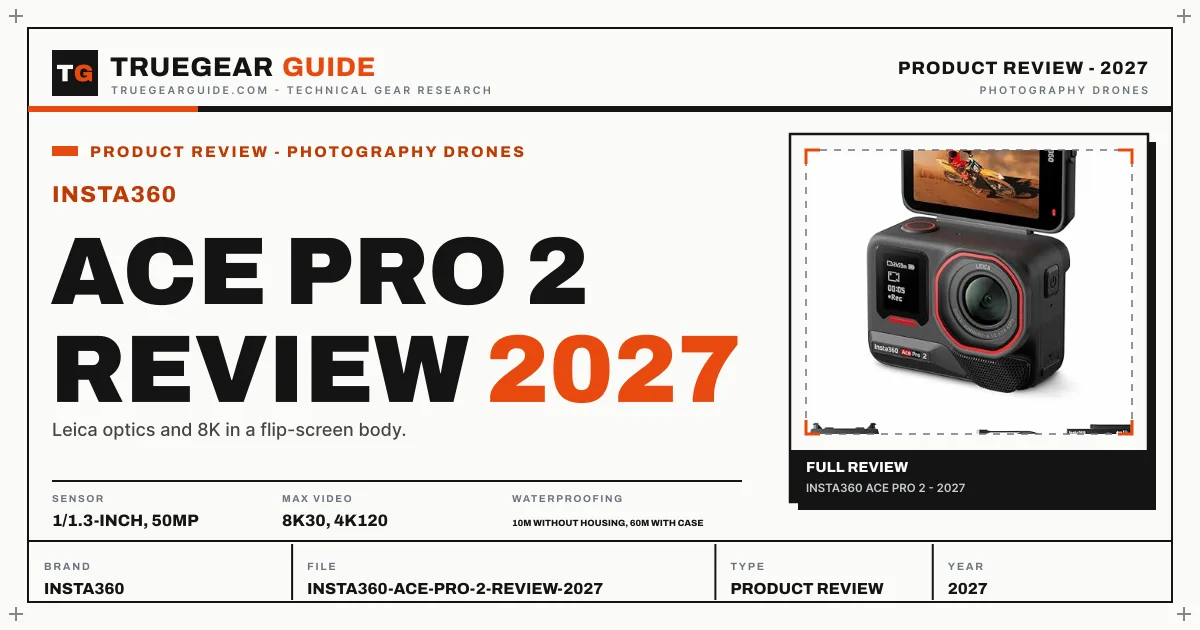
In-depth research review of the Insta360 Ace Pro 2: Leica 1/1.3-inch sensor, 8K30 capture, flip screen, and AI editing.

Our verdict
The Ace Pro 2 shoots the prettiest daylight footage of any action camera here, and the flip screen makes it the best self-shooting tool in the class. 8K is more reframing tool than delivery format, and battery life trails DJI, but for creators who prioritize image quality, it leads.
What we like
- 1/1.3-inch 50MP sensor co-engineered with Leica
- 8K30 capture leads the category on paper
- Flip-up screen suits vlogging without accessories
- AI editing tools speed up highlight reels
What to watch out for
- 8K files are enormous and most delivery is still 4K
- 10m waterproofing trails DJI without a housing
- Interface has more learning curve than GoPro
What owners report: Insta360 Ace Pro 2
Synthesized from recurring themes in long-term owner feedback.
Most praised
- Daylight footage is the sharpest owners have seen from this camera class, helped by the Leica tuned lens
- The flip screen makes solo vlogging framing effortless without a phone or mirror
- AI assisted editing turns a card full of clips into a watchable highlight cut quickly
Common complaints
- Top resolution files are enormous while most finished work still ships in 4K
- Water resistance without a case trails the DJI cameras divers compare it with
- The interface takes longer to learn than the simpler GoPro layout
Who it is for
Travel and lifestyle creators who film themselves, prioritize daylight image quality, and want AI-assisted editing to speed up turnaround.
Optics and sensor
The Leica-co-engineered lens on a 1/1.3-inch 50MP sensor delivers excellent sharpness and color in good light, with less of the over-sharpened look some action cameras produce. 8K30 capture enables dramatic reframing: extract stable 4K close-ups from wide shots in post.
Vlogging design
The 2.5-inch flip touchscreen is the best self-framing solution in the category, brighter and larger than front-screen implementations. Combined with gesture control and AI-powered auto-editing, it is purpose-built for solo creators.
Trade-offs
8K files are enormous: budget storage and accept longer transfers. 10m waterproofing is adequate for snorkeling but trails DJI for diving. Low-light performance is good for the class but the sensor prioritizes resolution over pixel size.
Key specifications
- Sensor
- 1/1.3-inch, 50MP
- Max video
- 8K30, 4K120
- Waterproofing
- 10m without housing, 60m with case
- Stabilization
- FlowState stabilization with horizon lock
- Display
- 2.5-inch flip touchscreen
Also consider

DJI Osmo Action 5 Pro
The battery-life and low-light leader.
Why consider it: Choose the Action 5 Pro for longer battery life, 20m waterproofing, and better cold-weather performance.
- Sensor: 1/1.3-inch, 40MP
- Max video: 4K120, 4K60 HDR

GoPro HERO13 Black
The reference action camera with the biggest accessory ecosystem.
Why consider it: Choose the HERO13 for the largest mount ecosystem and proven reliability in extreme sports.
- Sensor: 1/1.9-inch, 27MP
- Max video: 5.3K60, 4K120, 2.7K240
Research-based assessment. TrueGear has not hands-on tested this product; this evaluation synthesizes manufacturer specifications, retailer documentation, and published expert reviews.
Questions, answered
Is 8K30 actually usable?
For reframing into 4K deliverables, yes, with fast cards and ample storage. For direct 8K delivery, almost no audience can view it; treat 8K as production flexibility.
How good is the AI editing?
Useful for highlight reels and auto-framing 360-style reframes, but it works best as a first cut. Serious creators still finish edits manually; the AI saves time on selects, not on storytelling.
Does the flip screen hurt durability?
It adds a hinge, which is inherently less rugged than a fixed screen. For extreme sports with impacts, a fixed-screen camera in a protective housing is the safer choice.