In-depth review
Evenflo LiteMax 35 Review (2027)
In-depth research review of the Evenflo LiteMax 35: 8.5-pound carrier, 35-pound limit, harness fit, and value.
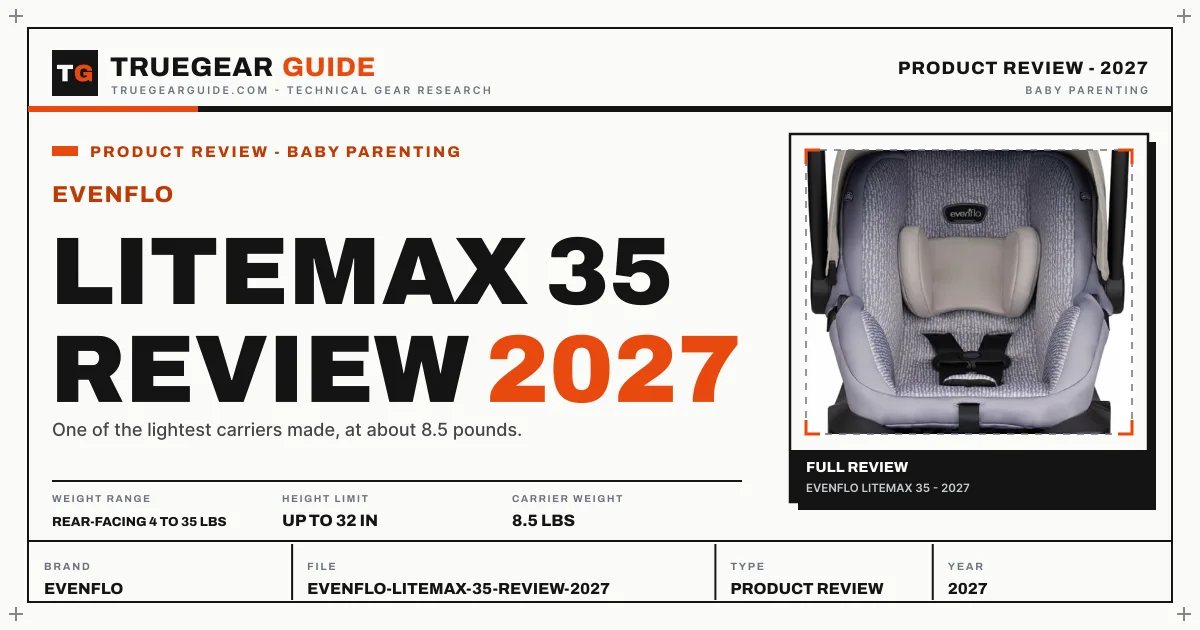

Our verdict
The LiteMax 35 is the featherweight of infant seats: about 8.5 pounds of carrier covering 4 to 35 pounds. For parents who carry the seat constantly, that weight difference is felt every single day. The trade-offs are thinner padding and no advanced safety extras, but the fundamentals, harness fit, weight range, and easy carry, are all correct.
What we like
- Carrier is about 8.5 pounds, among the lightest available
- 35-pound rear-facing limit matches heavier seats
- Four harness positions and two buckle positions fit newborns well
- Ergonomic handle designed for comfortable carry
What to watch out for
- No load leg or anti-rebound bar
- Padding is thinner than premium seats
- Base installation is basic compared with lock-off systems
What owners report: Evenflo LiteMax 35
Synthesized from recurring themes in long-term owner feedback.
Most praised
- Among the lightest carriers made, and parents feel the difference on every carry into the house
- A full weight range means the light seat is not outgrown early to pay for its weight
- Multiple harness and buckle positions get a small newborn fitted snugly without extra inserts
Common complaints
- There is no load leg or anti-rebound bar for parents collecting safety hardware
- Padding is thinner than premium seats, which shows on longer drives
- The base install lacks the lock-off refinement of pricier systems
Who it is for
Parents who prioritize minimum carry weight, including those with stairs, long walks, or wrist and back strain.
The weight advantage
At about 8.5 pounds, the LiteMax 35 carrier is roughly a full pound lighter than the next-lightest seat here, and that gap widens against premium seats. Add a 10-pound baby and the total carry stays manageable. The ergonomic handle shape distributes the load better than basic wire handles. For apartment dwellers and frequent travelers, this is the defining feature.
Fit and range
Four harness positions and two crotch-buckle positions let the seat fit small newborns correctly, which light seats sometimes fumble. The 4-to-35-pound rear-facing range matches the best here, and the 32-inch height limit is standard. The padding is thinner than premium seats, so long rides are less plush, but the harness geometry is sound.
What you give up
There is no load leg, no anti-rebound bar, and the base installation is basic LATCH-or-belt without the lock-off refinements of pricier seats. The fabrics are simple. None of this affects FMVSS 213 compliance, which is identical across all seats. You are trading extras and plushness for weight and price, which for many parents is exactly the right trade.
Key specifications
- Weight range
- Rear-facing 4 to 35 lbs
- Height limit
- Up to 32 in
- Carrier weight
- 8.5 lbs
- Harness positions
- 4 harness, 2 crotch buckle
- Installation
- LATCH or vehicle belt
Also consider

Chicco KeyFit 30
The easiest install in the business, with a 4-pound starting weight.
Why consider it: Steps up install ease and newborn fit with the infant insert, for about a pound more carry weight.
- Weight range: Rear-facing 4 to 30 lbs
- Height limit: Up to 30 in

Graco SnugRide SnugFit 35
Anti-rebound bar and SnugLock install at a family-friendly tier.
Why consider it: Adds an anti-rebound bar and SnugLock install at a similar budget price, with more heft.
- Weight range: Rear-facing 4 to 35 lbs
- Anti-rebound: Anti-rebound bar included
Research-based assessment. TrueGear has not hands-on tested this product; this evaluation synthesizes manufacturer specifications, retailer documentation, and published expert reviews.
Questions, answered
Is 8.5 pounds really that much lighter?
Yes, in daily use. A pound of carrier plus a growing baby, carried multiple times a day up stairs or across parking lots, adds up fast. Parents with back or wrist issues notice it most.
Does the light weight mean less protection?
No. Protection comes from the shell geometry, harness, and installation, all of which meet the same FMVSS 213 standard. Weight is about materials and features, not crash performance.
Can it install without the base?
Yes, the carrier supports baseless installation with the vehicle belt, documented in the manual. This is handy for travel and second cars.