Buying guide
Electric Toothbrushes Buying Guide (2027)
How to choose an electric toothbrush in 2027: oscillating vs sonic, modes, pressure sensors, battery types, and the real cost of replacement heads.
Oscillating vs sonic: the core choice
Every electric brush is one of two types. Oscillating-rotating brushes (Oral-B) use a small round head that spins and pulsates, typically around 8,800 oscillations per minute, scrubbing each tooth individually. Sonic brushes (Philips, Aquasonic) vibrate side to side at 31,000 to 40,000 strokes per minute, using fluid motion to clean between teeth. Expert testing rates both highly for plaque removal. Choose oscillating if you like a precise, active feel or wear braces; choose sonic if your gums are sensitive or you prefer a smoother sensation.
Features that actually matter
Three features earn their keep. A 2-minute timer with quadrant alerts is non-negotiable; it is the main reason electric brushes outperform manual ones. A pressure sensor prevents the gum damage that heavy-handed brushing causes, and it matters more than any extra mode. Battery type determines convenience: lithium-ion brushes last 2 to 4 weeks, older NiMH cells about a week. App connectivity, by contrast, rarely changes outcomes and can be safely ignored.
Count the heads, not just the handle
The handle price is marketing; the replacement-head cost is the real price. You need 4 heads per year. Oral-B standard heads are the cheapest major-brand option, iO and Sonicare heads cost more, and the Aquasonic Black Series includes 8 heads (about two years). Before buying, multiply your chosen head price by 8 for a two-year cost picture. A cheap handle with expensive heads is the most common budget trap in this category.
Who should skip electric entirely
Almost no one, with two exceptions. If you already brush a full 2 minutes twice daily with perfect technique, usually because a hygienist trained you, a manual brush works fine. And immediately after certain dental surgeries, your dentist may restrict you to manual brushing temporarily. For everyone else, including kids over 3 with an age-appropriate head, electric brushing is the evidence-backed default.
Start with our top 3
The three highest-ranked products in our full electric toothbrushes ranking. Read the in-depth review where one exists, or jump to the product in the ranked list.

Oral-B Pro 1000
The proven workhorse: 3D cleaning at a budget price.
- Cleaning action: 3D oscillating-rotating-pulsating
- Oscillations: 8,800 per minute
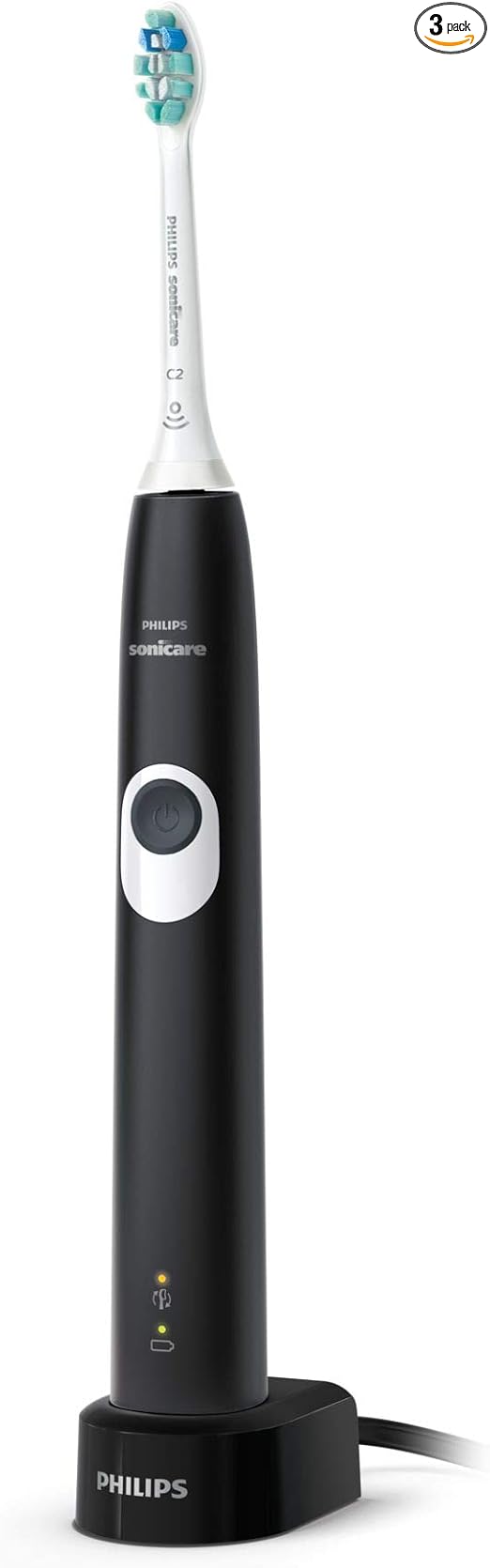
Philips Sonicare 4100
Gentle sonic cleaning with a 2-week battery.
- Cleaning action: Sonic, side-to-side sweeping
- Brush strokes: 31,000 per minute

Oral-B iO Series 3
Magnetic-drive cleaning with a smart pressure light ring.
- Drive system: iO magnetic drive
- Cleaning modes: 3 (Daily Clean, Sensitive, Whitening)
Questions, answered
How much should I spend on an electric toothbrush?
Spend for the features you will use: timer and pressure sensor are worth paying for, app features are not. Then compare 2-year total cost including heads. The cheapest handle is rarely the cheapest brush once heads are counted.
Are subscription brush heads worth it?
Only if the per-head price matches or beats retail. Subscriptions solve the real problem, people using worn heads too long, but a calendar reminder every 3 months solves it for free.
Can kids use electric toothbrushes?
Yes, generally from age 3 with a child-size head and supervision. The timer helps kids reach the full 2 minutes, which is the hardest part of children's brushing.
Do I still need to floss with an electric toothbrush?
Yes. No brush, electric or manual, fully cleans between teeth. Pair your brush with floss or a water flosser; the brush handles surfaces, floss handles contacts.