In-depth review
Doona Car Seat and Stroller Review (2027)
In-depth review of the Doona car seat and stroller: conversion mechanism, FAA approval, 4 to 35 lb range, and travel trade-offs.
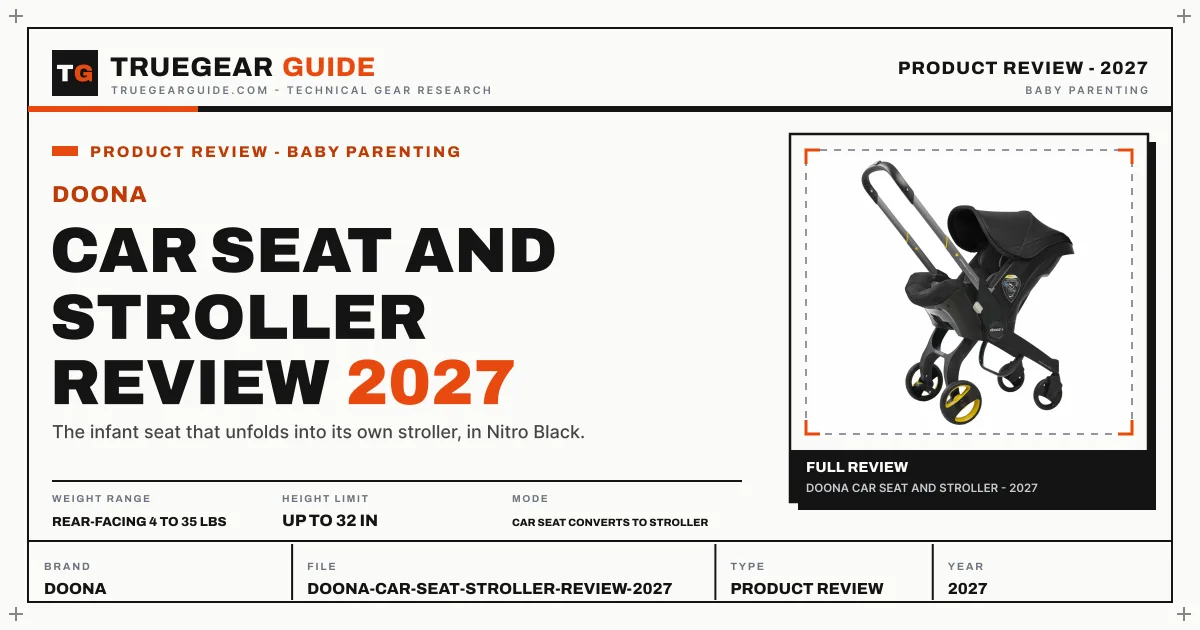
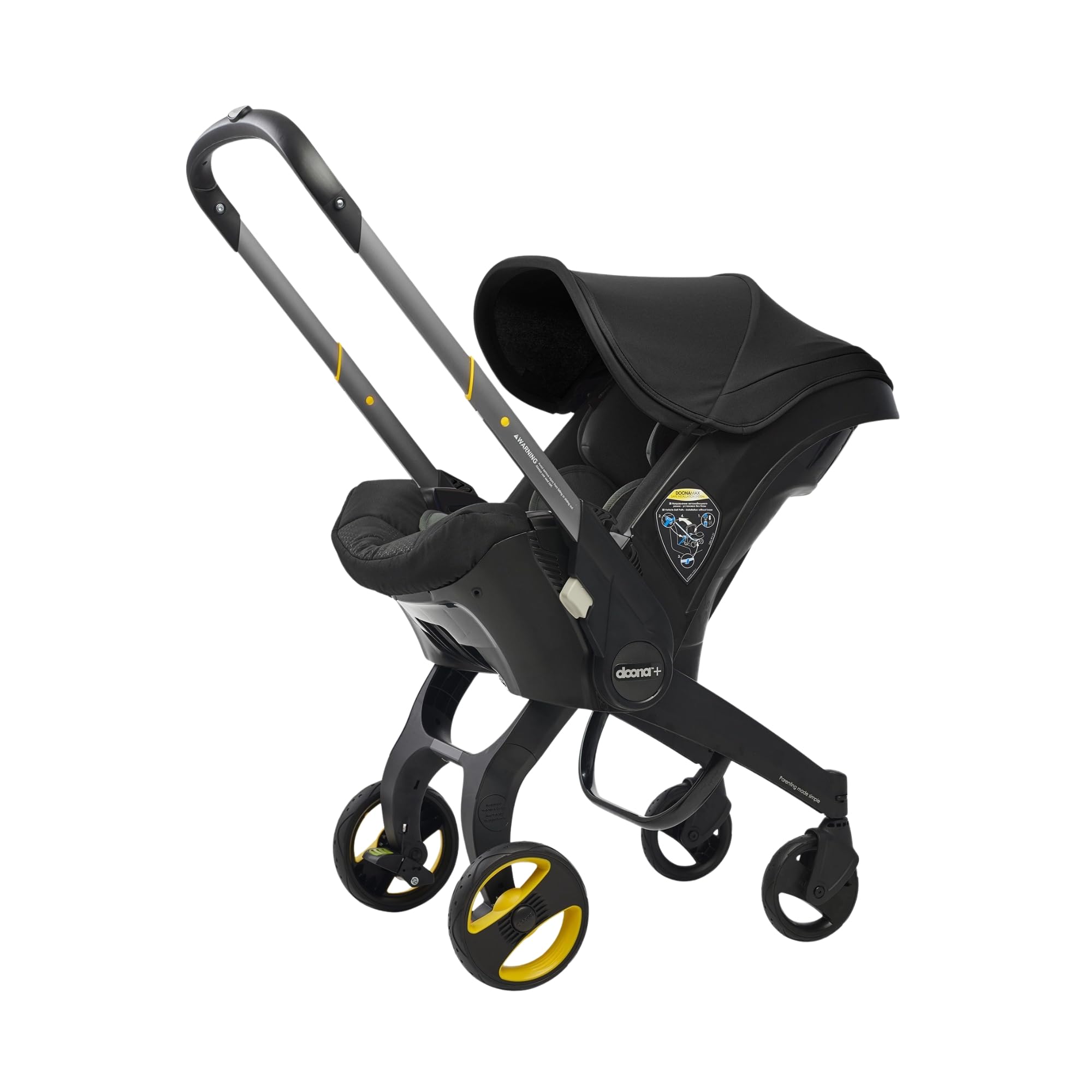
Doona Car Seat and Stroller
The infant seat that unfolds into its own stroller, in Nitro Black.
Our verdict
The Doona deletes a whole product category from the travel checklist: the seat unfolds into its own stroller at the curb and folds back into an FAA-approved rear-facing seat in the car. For fly-and-drive families it is genuinely transformative. The costs are real too: premium price, wheel hardware weight on every carry, and the same first-year outgrowth as any infant seat.
What we like
- Converts from car seat to stroller in seconds with integrated wheels
- FAA and TUV approved for air travel
- Rear-facing from 4 to 35 lb and up to 32 in
- LATCH base and seat protector included in the box
What to watch out for
- Heavier than a bare carrier because the wheels travel with it
- Outgrown on the same infant-seat timeline as rivals, at a premium price
- Stroller function is travel-grade, not a full-time stroller replacement
What owners report: Doona Car Seat and Stroller
Synthesized from recurring themes in long-term owner feedback.
Most praised
- Unfolding wheels at the aircraft door turns a layover with a sleeping baby into a non-event
- One device covering seat and stroller simplifies packing for flying families enormously
- Flight approval for the seat itself means the baby can ride in it on the plane
Common complaints
- The wheels travel everywhere, so it is heavier to carry up stairs than a bare carrier
- It is outgrown on the normal infant timeline despite costing far more than a seat alone
- As a stroller it suits travel and errands rather than replacing a full-time pushchair
Who it is for
Parents who fly and drive with an infant and want one device for the plane, the terminal, and the rental car.
The conversion
The mechanism is the product: release, and the wheels fold out from the seat shell to make a working stroller; fold them back and it is a car seat again. In airports and city stops, that means no separate stroller to check, carry, or forget, and a baby who can stay asleep through the transitions.
Safety and travel credentials
It is a rear-facing infant seat rated from 4 to 35 lb and up to 32 in with a 5-point harness, and it carries FAA and TUV approval for air travel. The included LATCH base and seat protector cover the home-car install, and baseless belt installation covers taxis and rentals.
Trade-offs
The wheels are always with you: as a hand-carried carrier it is heavier than the 7 to 9 lb seats in this guide, and as a stroller it is a travel tool, not a full-time pram with storage and suspension. Families who rarely fly will feel the premium more than the benefit.
Key specifications
- Weight range
- Rear-facing 4 to 35 lbs
- Height limit
- Up to 32 in
- Mode
- Car seat converts to stroller
- Approval
- FAA and TUV approved
- Harness
- 5-point
- Includes
- LATCH base, seat protector
Sources: Amazon product listing, CamelCamelCamel
Also consider

Evenflo LiteMax 35
One of the lightest carriers made, at about 8.5 pounds.
Why consider it: An 8.5 lb carrier for parents who would rather carry light and rent or bring a separate stroller.
- Weight range: Rear-facing 4 to 35 lbs
- Height limit: Up to 32 in

UPPAbaby Mesa Max
Load leg plus anti-rebound panel in a 10.5-pound carrier.
Why consider it: A premium seat that clicks into a full stroller system without adapters for daily use at home.
- Weight range: Rear-facing 4 to 35 lbs
- Height limit: Up to 32 in
Research-based assessment. TrueGear has not hands-on tested this product; this evaluation synthesizes manufacturer specifications, retailer documentation, and published expert reviews.
Questions, answered
Is the Doona allowed on planes?
Yes, it is FAA approved for air travel as a rear-facing child seat, and TUV approved as well. Check your airline's seat-purchase policy for infants, as approval and free carriage are different things.
When will my baby outgrow it?
At 35 lb or 32 in, whichever comes first, the same infant-seat envelope as most rivals. Tall babies will meet the height limit first.