Buying guide
Dog Ramps and Steps Buying Guide (2027)
How to choose a dog ramp or steps in 2027: incline math, weight margins, traction surfaces, and ramp-versus-step decisions.
Start with the height, then buy length
Measure the exact height: mattress top, sofa cushion compressed, or tailgate edge. Then buy the longest ramp your space and budget allow for that height. Incline, not length alone, is the spec: every extra foot of ramp at vehicle heights is joint relief your dog can feel.
Ramps versus steps, decided honestly
Choose a ramp for arthritis, IVDD risk, seniors, giants, and any post-surgical plan. Choose steps only for healthy, agile dogs that need jump prevention at low furniture, and recognize foam and plastic steps as small-dog tools. A step product marketed as a ramp does not change the biomechanics.
Weight ratings need motion margin
Dogs do not stand still on ramps; they stride, hesitate, and occasionally bounce. Buy at least 25 percent above your dog's weight, double for nervous large dogs, and treat visible flex as a confidence problem even when it is not a safety one.
Traction and training are one purchase
Grass, rubber, ridged carpet, and grooves all work; glossy plastic does not. Then budget a week of staged training: flat, low, full height, treats at every stage, for both directions. Most ramp failures are skipped training, and most ramp successes are boring, patient repetitions.
Two-station homes and vehicle fit checks
Many dogs need help in two places: onto the bed or sofa indoors, and into the vehicle outdoors. One ramp rarely serves both well, because indoor ramps optimise for looks and a fixed gentle angle, while vehicle ramps optimise for folding, grip in wet weather, and surviving the boot of a car. Budget for the station your dog uses daily first, test the ramp against the actual tailgate or door sill before a trip, and practise there, not in the departure-day rush.
Start with our top 3
The three highest-ranked products in our full dog ramps and steps ranking. Read the in-depth review where one exists, or jump to the product in the ranked list.
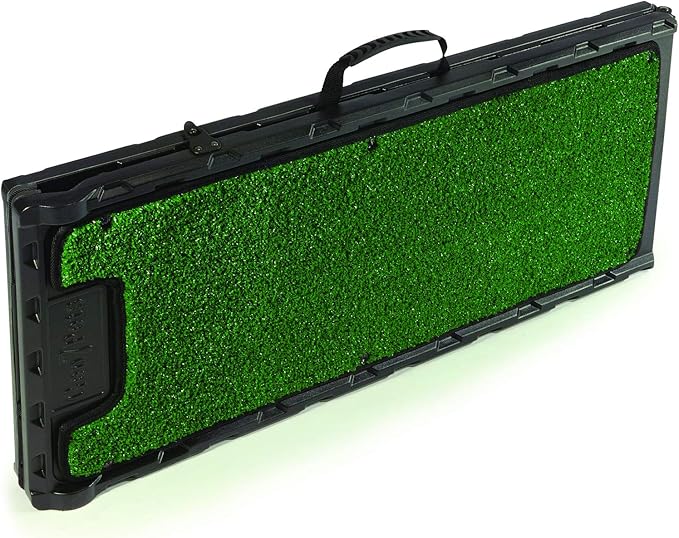
Gen7Pets Natural Step Ramp
A 72-inch grass-surfaced ramp with the gentlest incline for vehicles.
- Length: 72 in open
- Weight limit: Up to 250 lb class (verify listing)

PetSafe CozyUp Folding Pet Ramp
A 62-inch folding ramp for beds and SUVs, rated to 150 lb.
- Length: 62 in open, folds to approx. 31 in
- Weight limit: 150 lb

HBTower Folding Dog Ramp 63 Inch
A 63-inch aluminum folding ramp rated to 250 lb, with a non-slip surface.
- Length: 63 in open, quad-folding
- Width: 17.3 in
Questions, answered
What is the best ramp material?
Aluminum and molded plastic own vehicle duty for weight and weather. Wood owns indoor duty for looks and stability. Match material to station, not to taste alone.
How wide should a ramp be?
At least your dog's body width plus paw-placement room: roughly 16 inches for medium dogs, 18 to 20-plus for large and unsteady dogs.
Can I leave a ramp set up outdoors?
Vehicle ramps tolerate weather but last longer stored dry. Wooden indoor ramps should never live outside; moisture warps them and ruins traction finishes.
Do ramps help cats too?
Yes. Senior and arthritic cats use bedside ramps readily, and the same gentle-incline logic protects their joints.