Head to head
CHI Original Ceramic vs T3 Lucea (2027)
Head-to-head: CHI Original Ceramic Iron versus T3 Lucea on temperature control, glide, and everyday value.
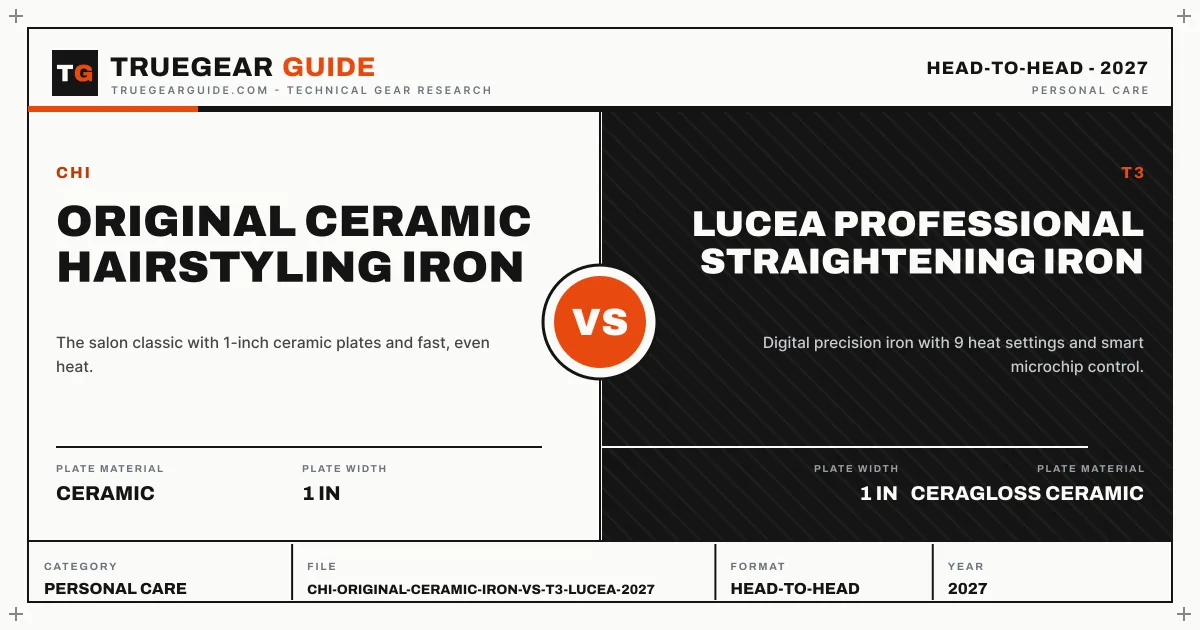

CHI Original Ceramic Hairstyling Iron
The salon classic with 1-inch ceramic plates and fast, even heat.
- Plate material: Ceramic
- Plate width: 1 in
T3 Lucea Professional Straightening Iron
Digital precision iron with 9 heat settings and smart microchip control.
- Plate material: CeraGloss ceramic
- Plate width: 1 in
Our recommendation
Buy the CHI Original for simple, proven ceramic performance at a mid price. Buy the T3 Lucea if precise, repeatable digital temperatures matter, especially on fine hair that needs the 260-degree low end. The Lucea is the control upgrade; the CHI is the durable classic.
Temperature control
The CHI runs a single preset near 392 degrees. The Lucea offers 9 digital settings from 260 to 410 with microchip correction. If your hair's ideal is not 392, only one of these can hit it.
Plates and glide
Both use ceramic with floating or cushioned designs. The CHI's plates are the longtime salon standard for snag-free glide; the Lucea's CeraGloss plates feel equally smooth with a slightly wider styling surface.
Price and audience
The CHI costs less and asks nothing of you. The Lucea costs premium money and returns precision that fine-haired and detail-oriented users genuinely use.
Choose CHI Original Ceramic Hairstyling Iron if…
- You want set-and-go simplicity
- Your hair is fine to medium and suits 392 degrees
- Budget favors the mid tier
Choose T3 Lucea Professional Straightening Iron if…
- You want exact digital temperatures
- Your hair is fine and needs heat below 300 degrees
- You style varied textures in one household
Questions, answered
Which lasts longer?
Both are durable; the CHI's simpler electronics and salon history give it a slight longevity edge.
Which is better for curls?
A tie on 1-inch plates. The CHI's floating plates grip slightly firmer for defined curls.
Does the Lucea remember my setting?
It returns to the last used digital setting behavior typical of its class; check the display at heat-up to confirm before the first pass.