Buying guide
Cervical Pillows Buying Guide (2027)
How to choose a cervical pillow in 2027: measuring lobe height, position fit, foam types, and the adaptation week explained.
Measure before you shop
For side sleeping, measure from the side of your neck to the outer edge of your shoulder; that distance, slightly compressed, is your target lobe height. For back sleeping, most necks suit a lobe around 3 to 4 inches. Mattress firmness shifts the answer: soft mattresses let the shoulder sink, reducing needed height, which is why adjustable models forgive measurement errors.
Match the shape to your position
Back sleepers: a moderate contour or roll with a cradle, like Rest Cloud or IKSTAR. Side sleepers: a taller lobe, ideally with shoulder room, like Mkicesky. Combination sleepers: dual-height contours or the Osteo butterfly. Stomach sleepers: skip contours and choose thin and soft. Buying against your position guarantees a return.
Foam quality and firmness
Dense foams, TEMPUR material and CertiPUR-US certified options, hold their geometry for years; budget foams soften sooner. Firmness should scale with your size and position: heavier side sleepers need firm, petite back sleepers need gentle. When a listing hides density and certification, price is telling you why.
Trial and adaptation
Give any contour a full week, sleeping your normal position, before judging. Morning stiffness often improves gradually as the neck adapts. Sharp pain, radiating symptoms, or numbness are not adaptation: stop, and consult a clinician. Prefer sellers with easy returns, because pillow fit is the most personal variable in bedding.
Start with our top 3
The three highest-ranked products in our full cervical pillows ranking. Read the in-depth review where one exists, or jump to the product in the ranked list.
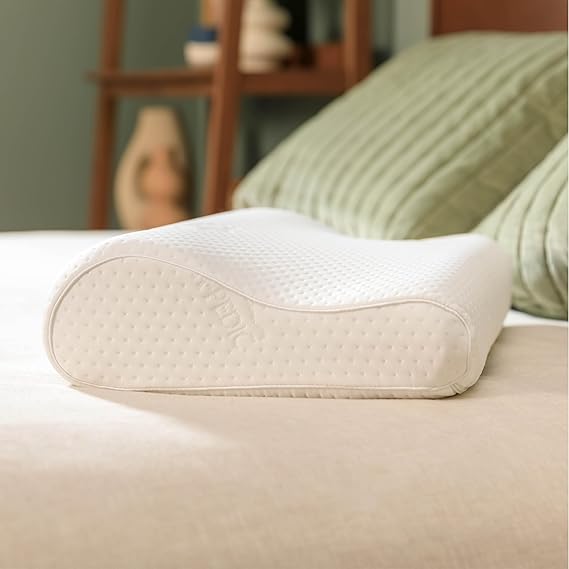
Tempur-Pedic TEMPUR-Neck Pillow
The original molded contour in genuine TEMPUR material.
- Shape: Molded ergonomic contour
- Material: TEMPUR pressure-relieving foam, firm

EPABO Contour Memory Foam Pillow
The budget contour best-seller with two usable heights.
- Shape: Contour, dual-height lobes
- Material: Memory foam, medium-firm

Osteo Cervical Pillow for Neck Pain Relief
A butterfly contour with arm channels for side sleepers.
- Shape: Butterfly contour with arm channels
- Material: Memory foam, medium-firm
Questions, answered
Can I use a cervical pillow with a CPAP?
Yes; side-position contours with cut edges, like butterfly and shoulder-cutout designs, often help mask clearance. Check that the lobe height does not tilt the head into the mask seal.
How often should cervical pillows be replaced?
When the lobe no longer springs back or morning stiffness returns despite correct positioning: one to two years for budget foam, several for premium dense foam.
Is memory foam the only cervical material?
No: latex contours and shredded adjustable pillows exist, but molded memory foam dominates this category because it holds a precise shape. Our picks focus on the proven mainstream.
Should the pillow smell change my decision?
New memory foam odor is normal and fades in days with airing. Certified foams like Elviros and Tempur-Pedic meet emissions standards; persistent strong odor after a week is a return reason.