Buying guide
Baby Strollers Buying Guide (2027)
How to choose a baby stroller in 2027: stroller types, fold mechanisms, weight limits, wheels, canopies, and safety standards explained.
Match the stroller type to your life
Full-size strollers like the Cruz V2 suit daily neighborhood use with big baskets and reversible seats. Travel systems bundle the infant seat for driving families. All-terrain models like the City Mini GT2 trade some polish for rough-ground ability. Lightweight and umbrella strollers win on portability but give up storage and suspension. Start from your most common trip, not the feature list.
The fold is the feature
You will fold the stroller hundreds of times, usually holding a baby. Prioritize one-hand or one-step folds that stand independently when folded; a fold that needs two hands and lays flat in the trunk gets old fast. Test the fold in a store with a bag on your shoulder to simulate real conditions.
Weight, capacity, and longevity
Check two numbers: the stroller's own weight (21.5 to 25.5 pounds for the models here) and the child weight capacity (50 to 65 pounds). A 65-pound capacity like the City Mini GT2's can add a year or more of usable life. Higher capacity usually means a sturdier frame, which also shows up as better handling.
Safety standards to know
All strollers sold in the US must meet CPSC requirements, and JPMA certification indicates independent testing to the ASTM stroller standard covering stability, restraints, and hinge hazards. Always use the 5-point harness, never hang heavy bags on the handlebar, and lock the brakes whenever the stroller is stationary.
Start with our top 3
The three highest-ranked products in our full baby strollers ranking. Read the in-depth review where one exists, or jump to the product in the ranked list.
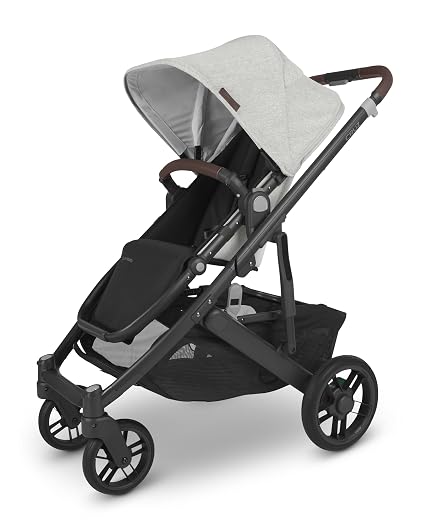
UPPAbaby Cruz V2
The full-size stroller that folds in one step and stands on its own.
- Stroller weight: 25.5 lbs
- Child weight capacity: 50 lbs

Baby Jogger City Mini GT2
All-terrain wheels and a true one-step fold for city and trail.
- Stroller weight: 21.5 lbs
- Child weight capacity: 65 lbs

Chicco Bravo 3-in-1 Trio Travel System
The KeyFit 30 system with a one-hand quick fold parents actually use.
- Stroller weight: 23 lbs
- Child weight capacity: 50 lbs
Questions, answered
How much should I spend on a stroller?
Spend to your use case. A daily primary stroller justifies the premium tier because fold quality and durability pay off over thousands of uses. A secondary travel or grandparent-house stroller does not; budget models cover the basics safely.
Do I need a bassinet?
Not necessarily. A bassinet gives a lie-flat surface for long walks with a newborn, but an infant car seat on the frame covers short trips, and many seats recline near-flat. Buy the bassinet if you walk daily in the first months.
When should I switch from the infant seat to the toddler seat?
Move up when the baby exceeds the seat's weight or height limits, or around 6 months when they can sit with support and want to see out. The toddler seats here recline for naps, so the transition is comfortable.
Are used strollers safe to buy?
They can be, with checks: confirm no recalls on the CPSC database, inspect the harness and brakes, and ensure the fold locks work. Never buy a used car seat, since crash history is invisible; strollers do not carry that risk.